
SM Art Center
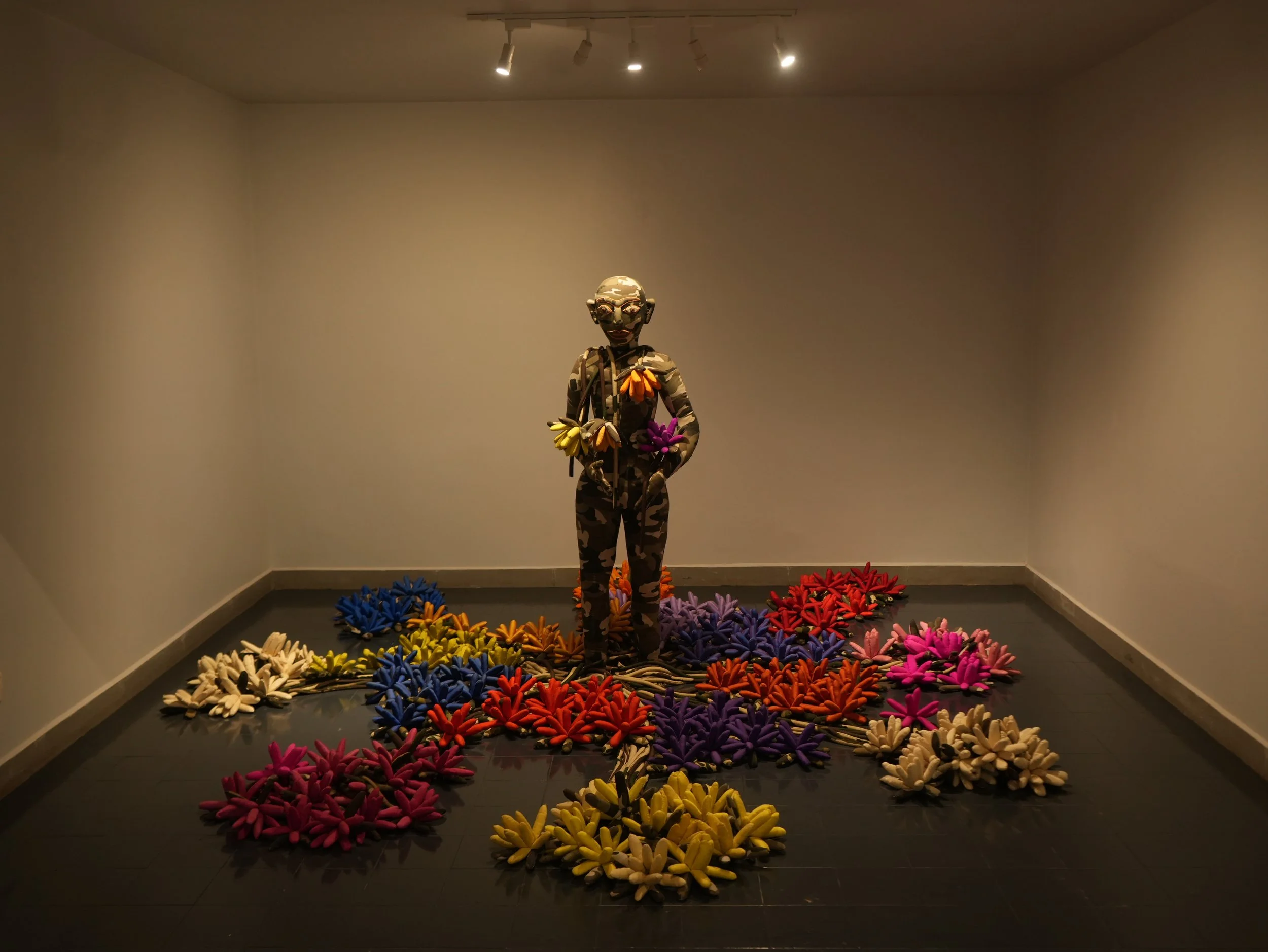
While searching for arts and cultural spaces in Siem Reap, I was surprised to discover SM (Sareth & Maline) Art Center.
Getting there meant riding my motorbike about 15 minutes from the city center, including a stretch along a dusty, muddy road. Entrance was $2.50 for Cambodians and $5 for foreigners.
And wow, I wasn’t prepared for the scale of this place. From the outside, it looks like a large villa, but the interior feels enormous. Something about the building and the way it uses space reminded me of the Moco Museum in Amsterdam.
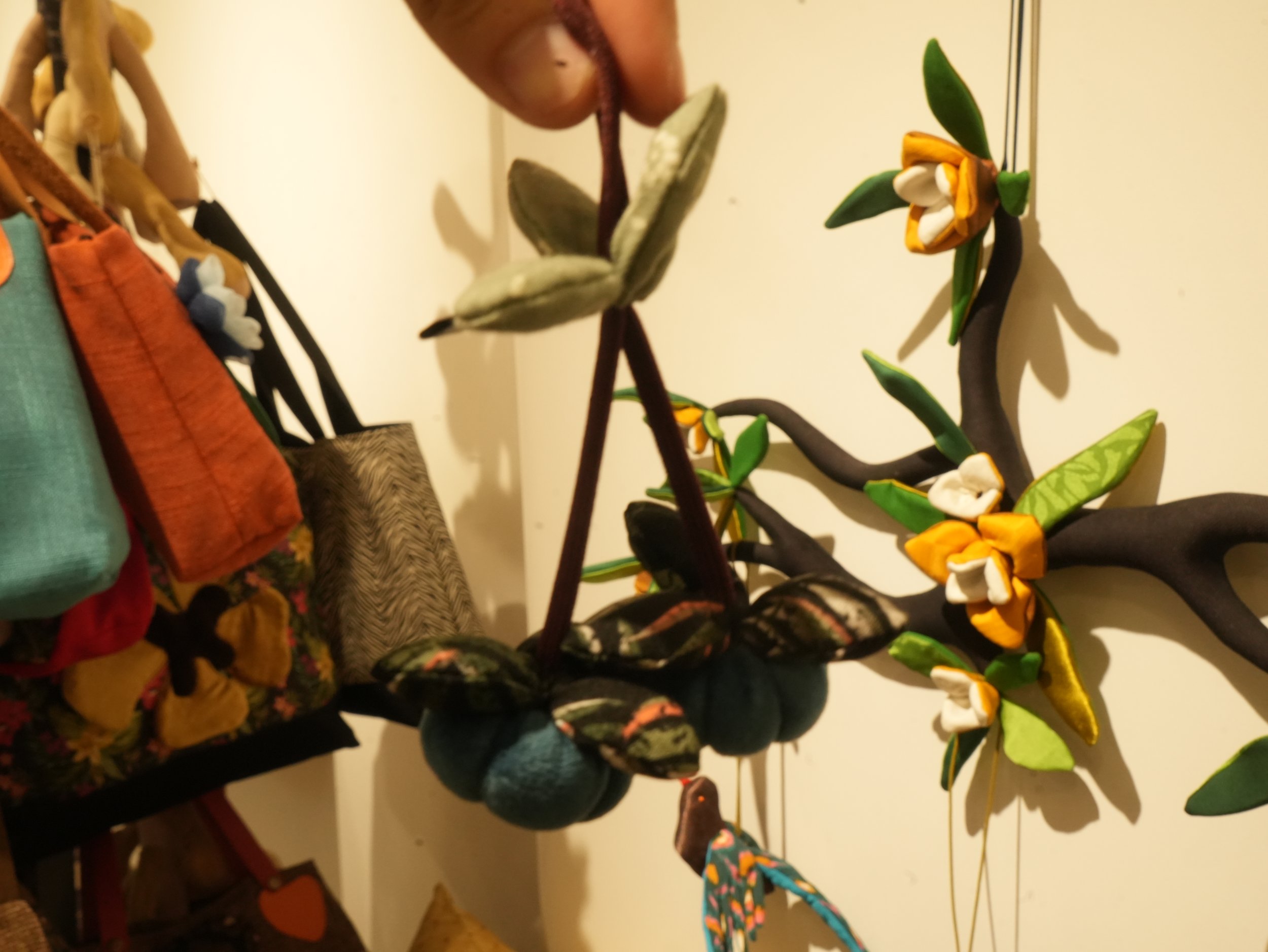
SM Art Center is relatively new. Founded by Cambodian artists Svay Sareth and Yim Maline, it officially opened in October 2025. The center brings together contemporary Cambodian art, a café, a garden and a souvenir shop. I got this little piece of 5$ from the shop, it’s so cute and reminds me of a mangosteen.
What stayed with me most, though, was how almost empty the museum was, despite how interesting the work was. It is the first fully realized contemporary art museum I’ve encountered in Cambodia.
The exhibition, Journey & Passion, unfolds across three floors, and the experience feels carefully choreographed. Through textiles, video, sculpture, performance and immersive installations, the artists explore memory, identity, war, displacement and humanity’s relationship with nature.
Svay Sareth’s work draws from Cambodia’s history of genocide and civil war, combining personal memory with questions about collective trauma, survival and national identity. Yim Maline’s work turns toward nature, childhood and environmental destruction, often transforming discarded fabrics into landscapes, waterfalls and other organic forms.
Moving through the galleries, I felt the depth of the artists’ curation. The materials, scale and placement of each work guide you from one emotional space into another, from the weight of Cambodia’s past to questions about healing, ecological loss and what we choose to carry into the future.
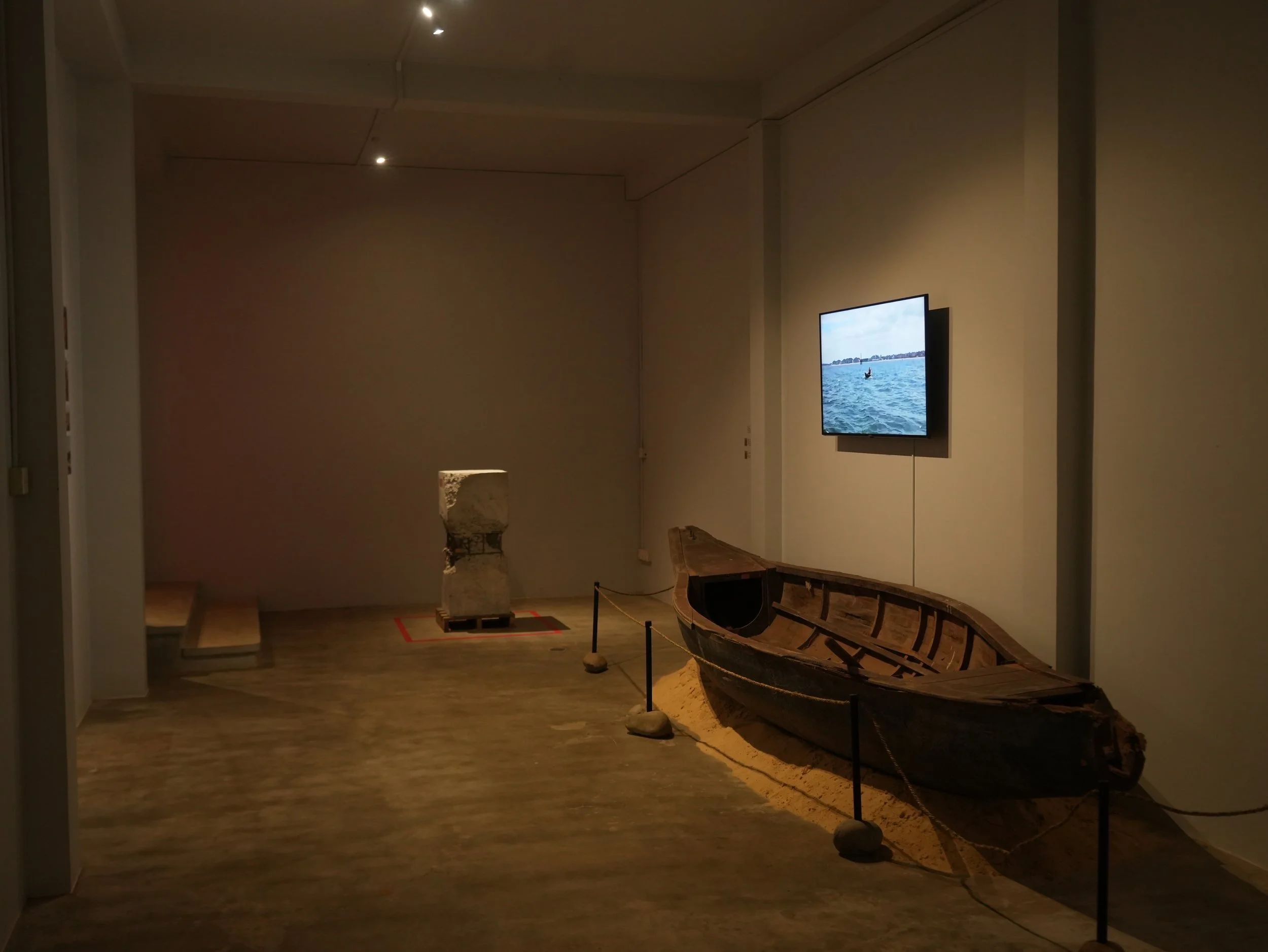
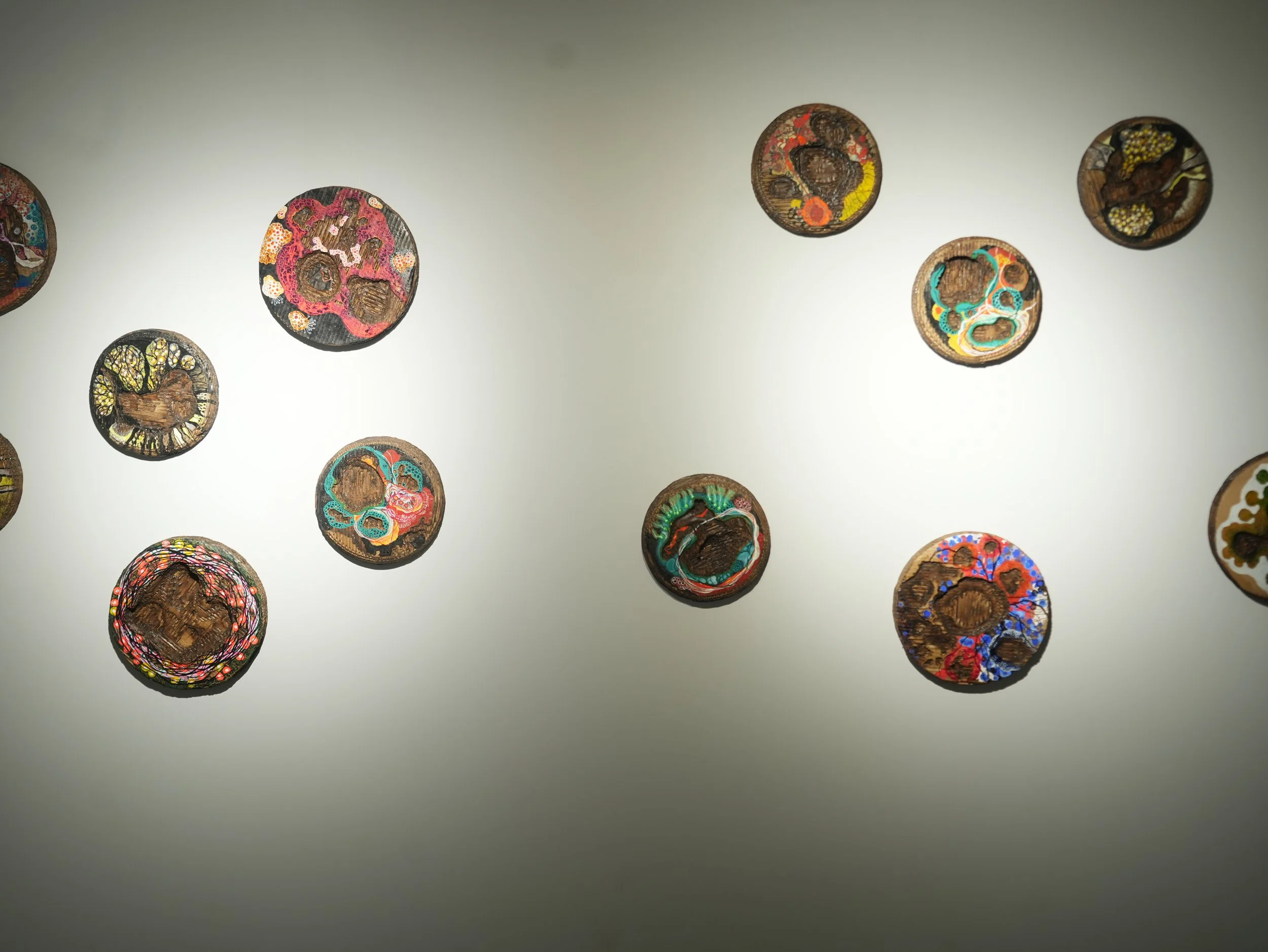
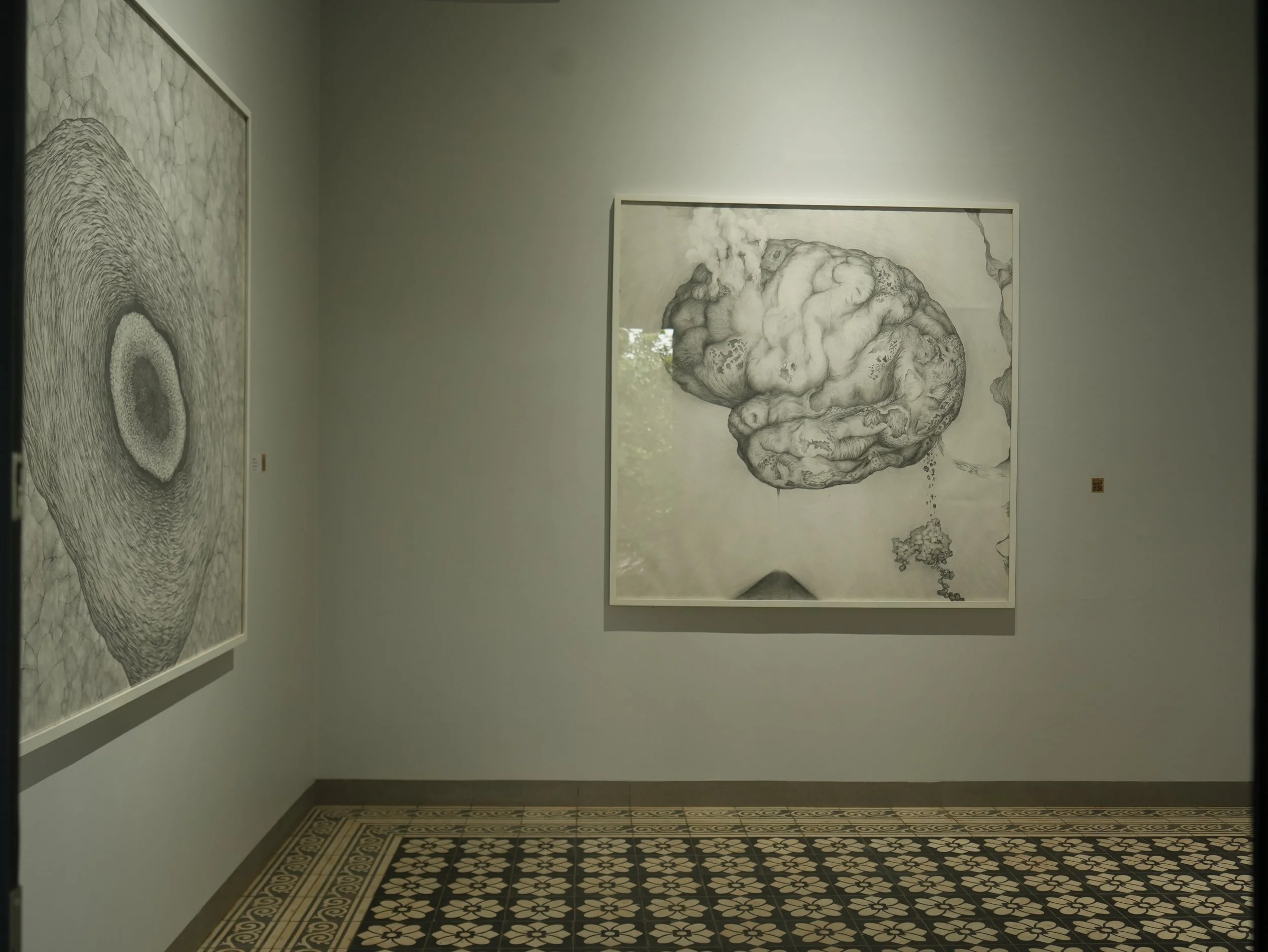
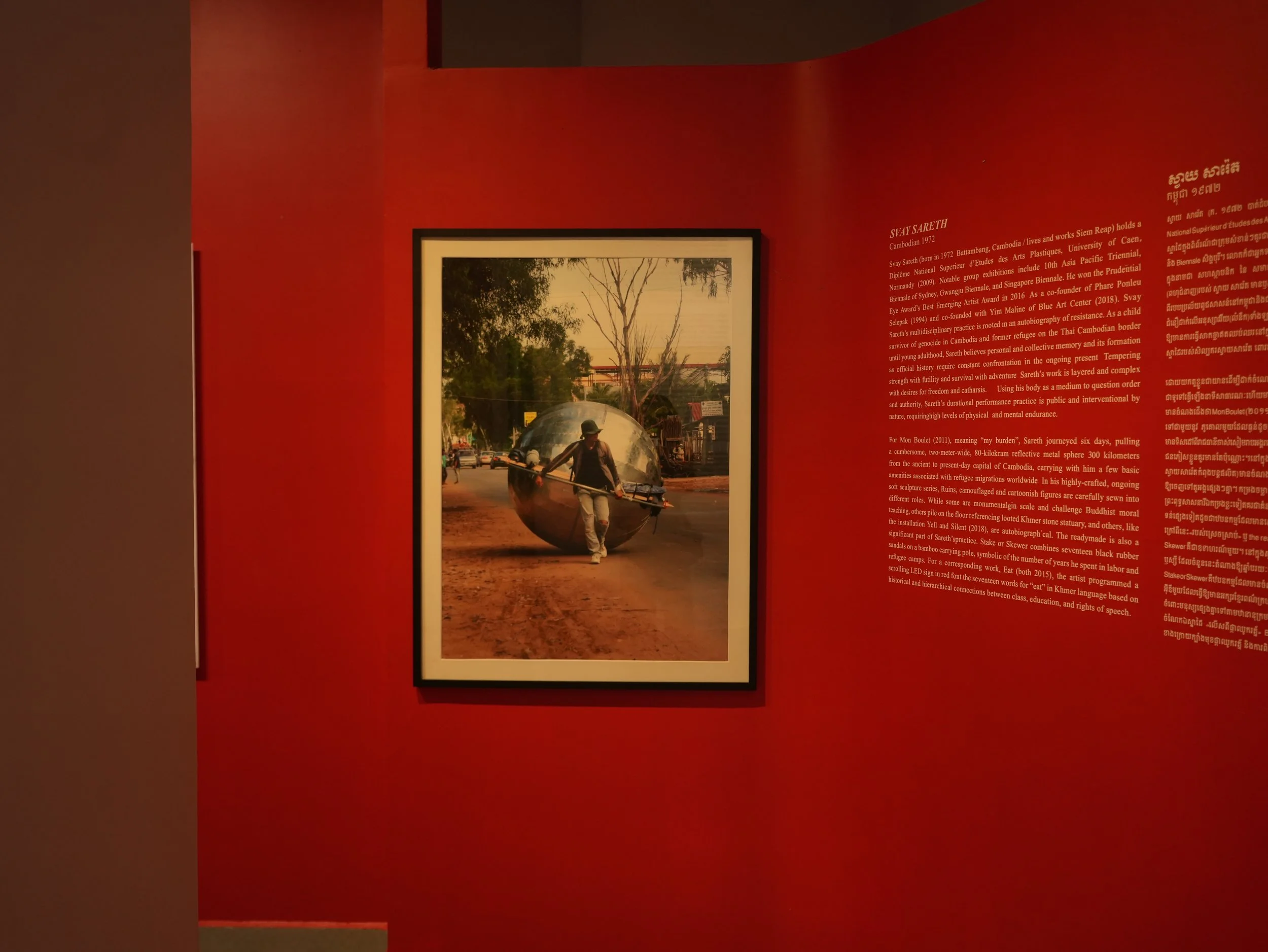
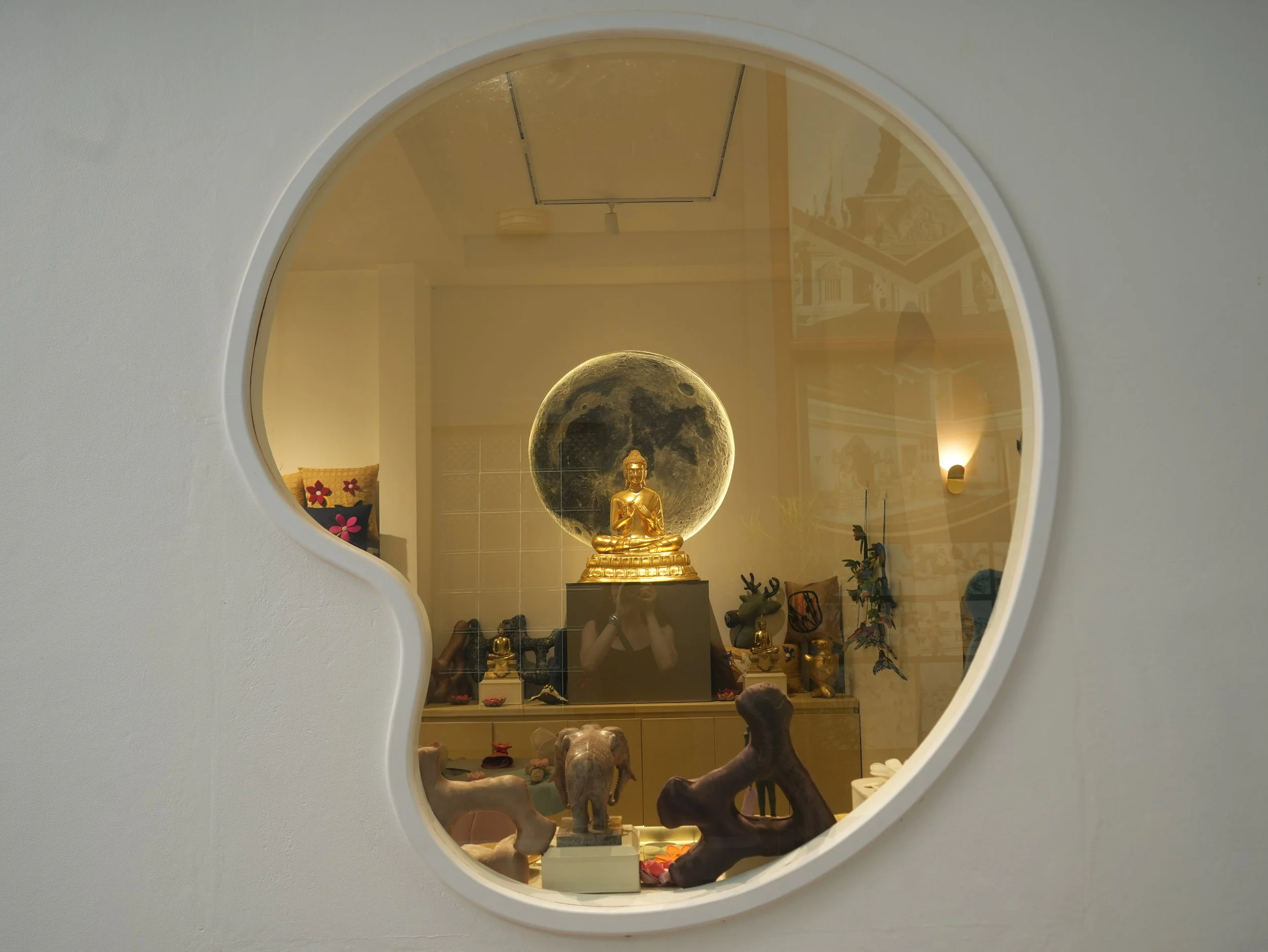
As I walked through the quiet rooms, I suddenly heard a man’s voice enthusiastically explaining something. When I moved closer, I saw him walking through the exhibition with a child who couldn’t have been more than ten years old. He was telling the child how important it is to come and look at things, even when they seem strange, and to try to understand abstract art, because doing so might help us understand something about ourselves and the people around us. That really touched me. It’s not often that I encounter contemporary art spaces that feel genuinely created with Cambodian audiences in mind. So much Cambodian art seems to circulate through foreign institutions, funding systems and expatriate communities, where it can sometimes be exoticised. Meanwhile, many local people are left feeling that contemporary art is something Western, or simply “not for them.”
Seeing that man introduce a child to art so openly and patiently felt quietly important.