
APOPO De-mining Visitor Center
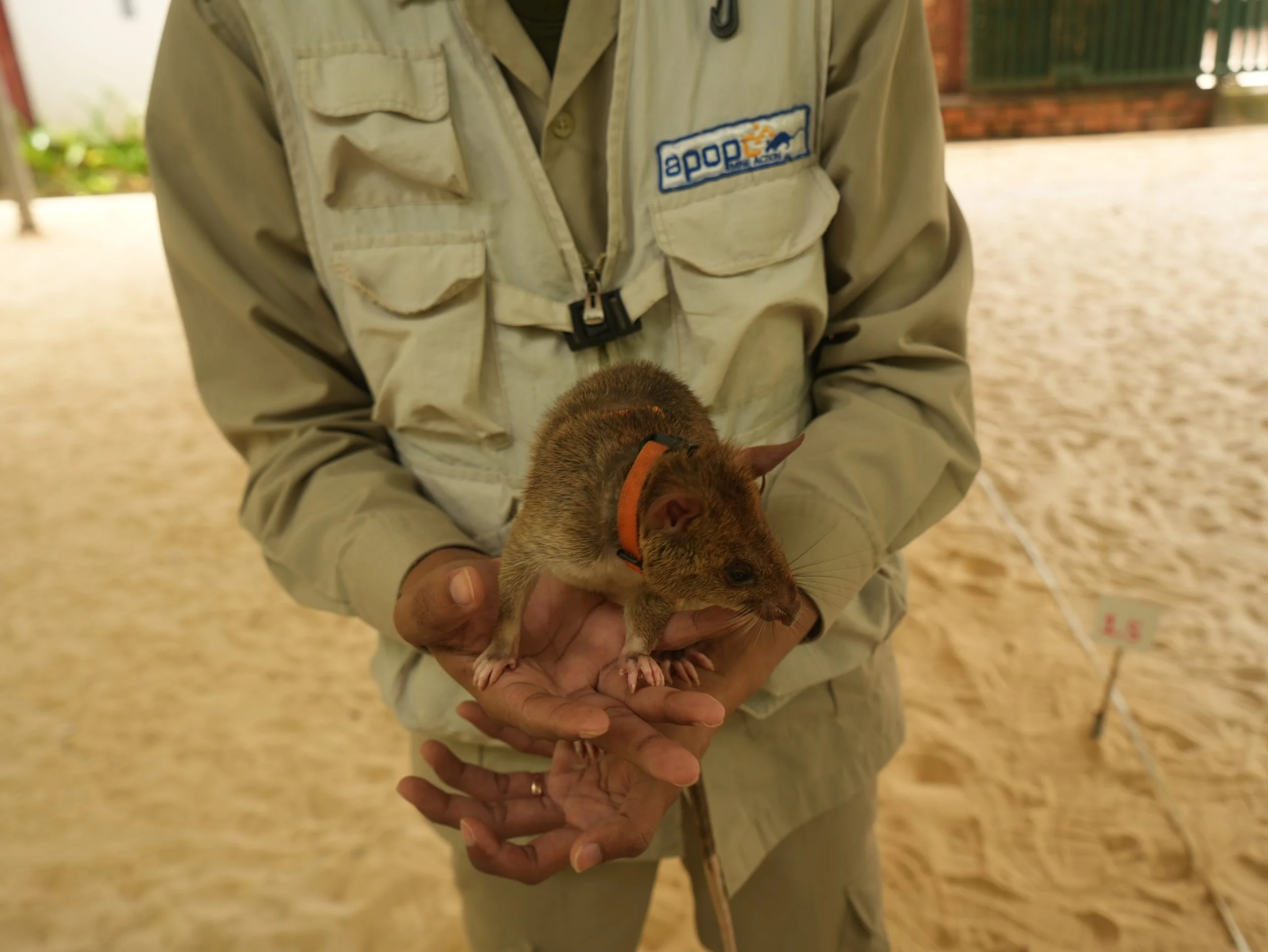
Vanna our little demonstrator that didn’t pass his exam to be a professional Hero Rat but still is showcasing his ability at the visitor center
Growing up in Cambodia, I had always heard about the landmines and unexploded ordnance left behind by decades of conflict, including the Khmer Rouge years. I knew about the country’s de-mining programs, but I don’t think I fully understood how consequential this history remains, or how devastating the numbers still are today. From 1979 to 2024, more than 65,000 mine and explosive-remnant casualties were recorded in Cambodia. Nearly 20,000 people were killed.
The guided tour at the APOPO Visitor Center costs $10 and lasts about an hour, I was put in a small group of foreigners. It introduces visitors to Cambodia’s landmine crisis and to one of the most unexpected parts of the demining effort: African giant pouched rats.
APOPO is a Belgian-rooted nonprofit founded in 1997 by Bart Weetjens and Christophe Cox. The organization developed its rat-training program in partnership with the Sokoine University of Agriculture in Tanzania. It began working with the Cambodian Mine Action Centre in 2014, and its mine-detection rats arrived in Cambodia the following year.
The rats, known as HeroRATs are trained in Tanzania to recognize the scent of explosives. During the demonstration, we watched one named Vanna move methodically across a simulated minefield. When it detected the scent it had been trained to find, it scratched at the ground and waited for its reward. We were also able to take pictures with it, only once we’ve washed our hands and arms as they’re very sensitive to the smell of creams and perfume for example. I was not brave enough to touch the big Vanna that was the size of a cat!
The rats do not remove or detonate the mines themselves. They identify where explosives may be buried so that trained human deminers can investigate and safely dispose of them. Because the rats are so light, they do not exert enough pressure to trigger a landmine.
I was also touched to learn that APOPO has a retirement program for its rats. They generally retire at around seven or eight years old, or earlier if they lose interest in working or their health begins to decline. After retirement, they remain in APOPO’s care, receiving food, exercise, enrichment and regular health checks for the rest of their lives.
There was something beautiful about that relationship: the animals are cared for throughout their lives, and their work helps return land to people who have lived with fear for generations.
It is an unusual place to visit, but an important one. The APOPO Visitor Center gave me an entirely new perspective on Cambodia’s recovery through healing the land.
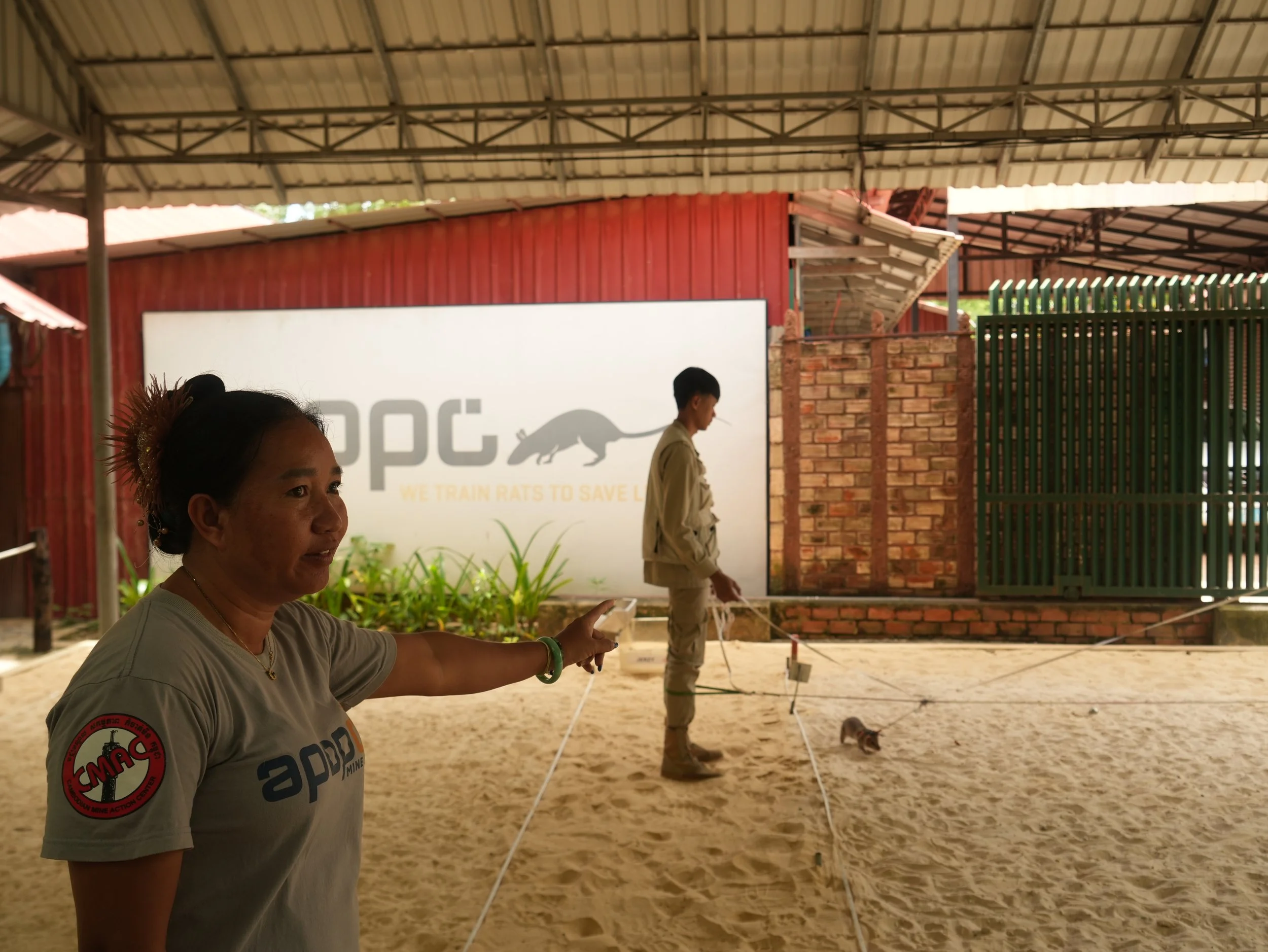
Bopha showing us the demonstration
