
National Museum
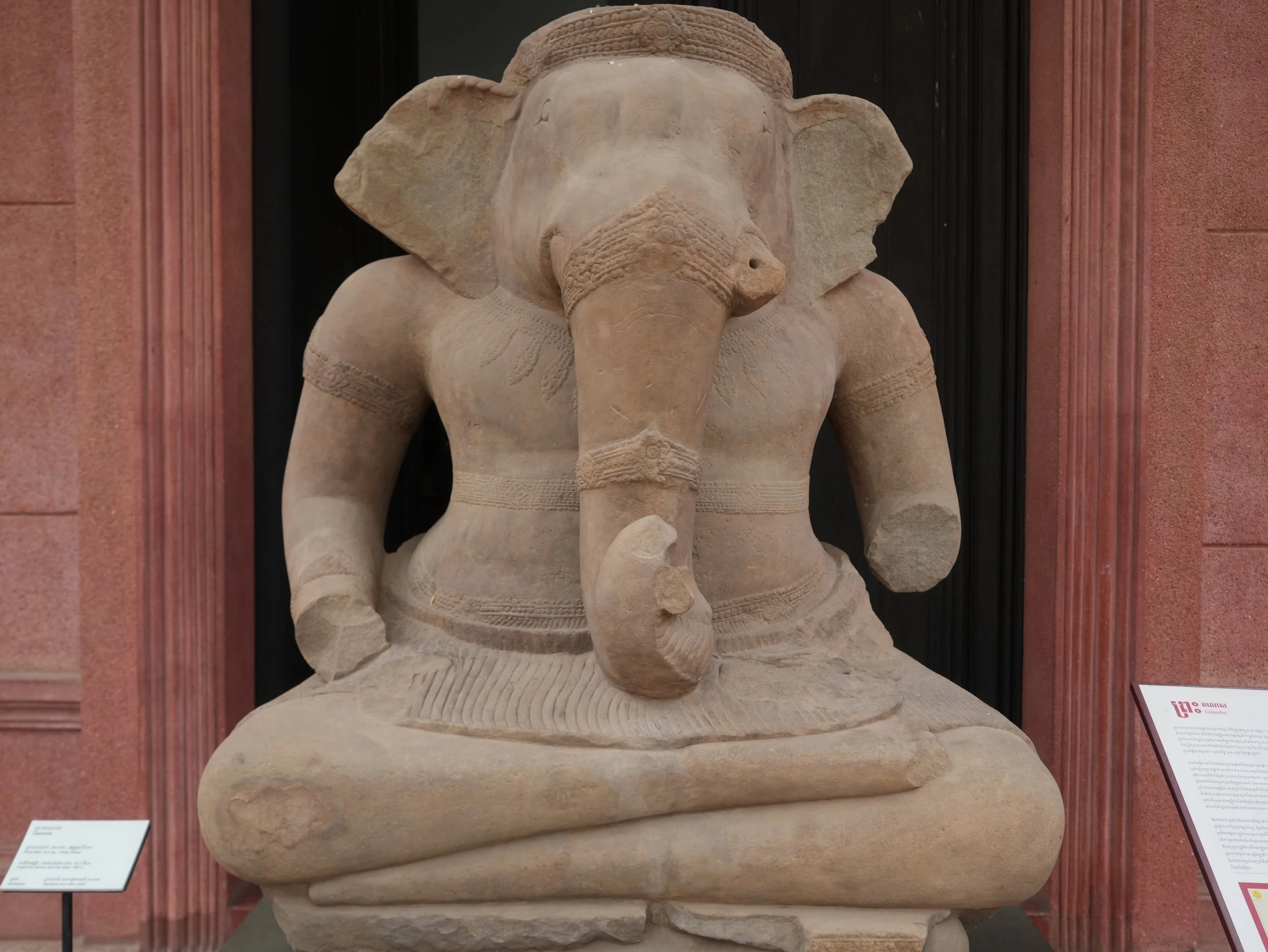
Many Angkorian statues represents the absorption of Hinduism in ancient khmer culture
I’ve been to a few countries, and more often than not, the national museum carries a certain weight of expectation. It’s usually grand, monumental, designed to impress, to assert a version of history that feels almost overwhelming. National Museum of Cambodia feels like the opposite of that. Rather than imposing itself, it offers a quieter, more intimate introduction to Khmer history. The scale is relatively small considering the richness and depth of the subject, but that’s part of its charm. The deep red walls, the open courtyards, and the lush gardens create a sense of calm that’s surprisingly rare for a national museum. Even more surprising: it’s not overly crowded. You can move through it at your own pace, without feeling rushed or overwhelmed.
The visit follows a gentle, almost intuitive clockwise path. Along the way, you encounter fragments of the past, sculptures, ornaments, and relics that trace the arc of Cambodian history. From the grandeur of the Angkorian era, often referred to as the Khmer Empire, to more recent and difficult chapters like the Khmer Rouge regime, and into the present, the narrative unfolds quietly, without spectacle.
What’s striking is that you wouldn’t immediately guess the building itself is over a century old. Completed in the early 20th century, its architecture feels timeless, sitting somewhere between traditional Khmer temple design and colonial-era influence. The layered roofing recalls pagodas and temples, while the courtyards and spatial layout echo a more European sensibility. The result is something that doesn’t feel dated, but rather suspended between eras.
It’s the kind of place that invites stillness. At some point, you stop moving through the museum and immerse yourself in it. It feels like the perfect setting to pull out a small piece of paper and sketch, whether it’s a statue, a roofline, or just the way the light falls into the courtyard. Time doesn’t exactly stop here, but it certainly slows down.
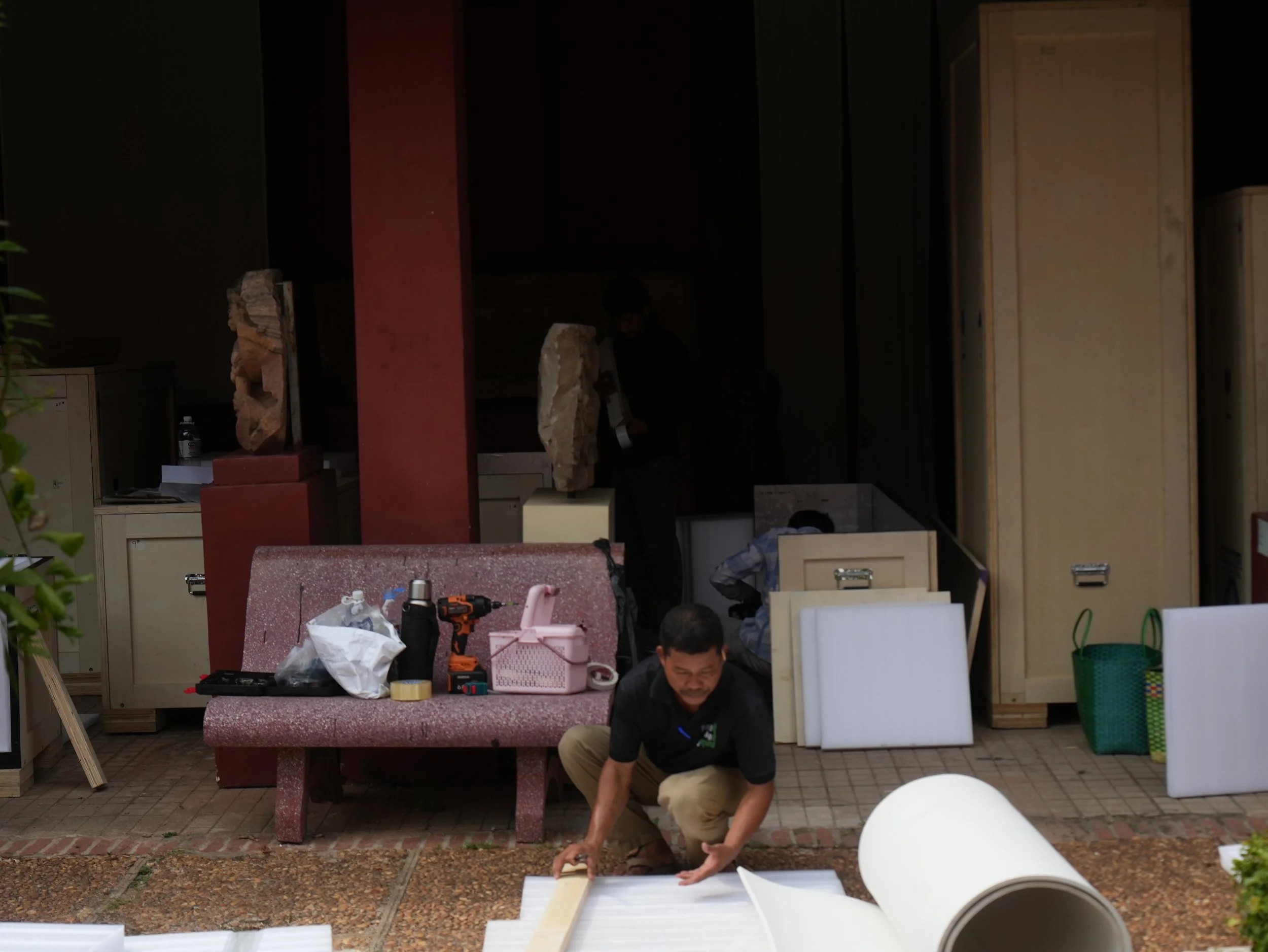
Many workers still arrange, plan and restore the artifacts
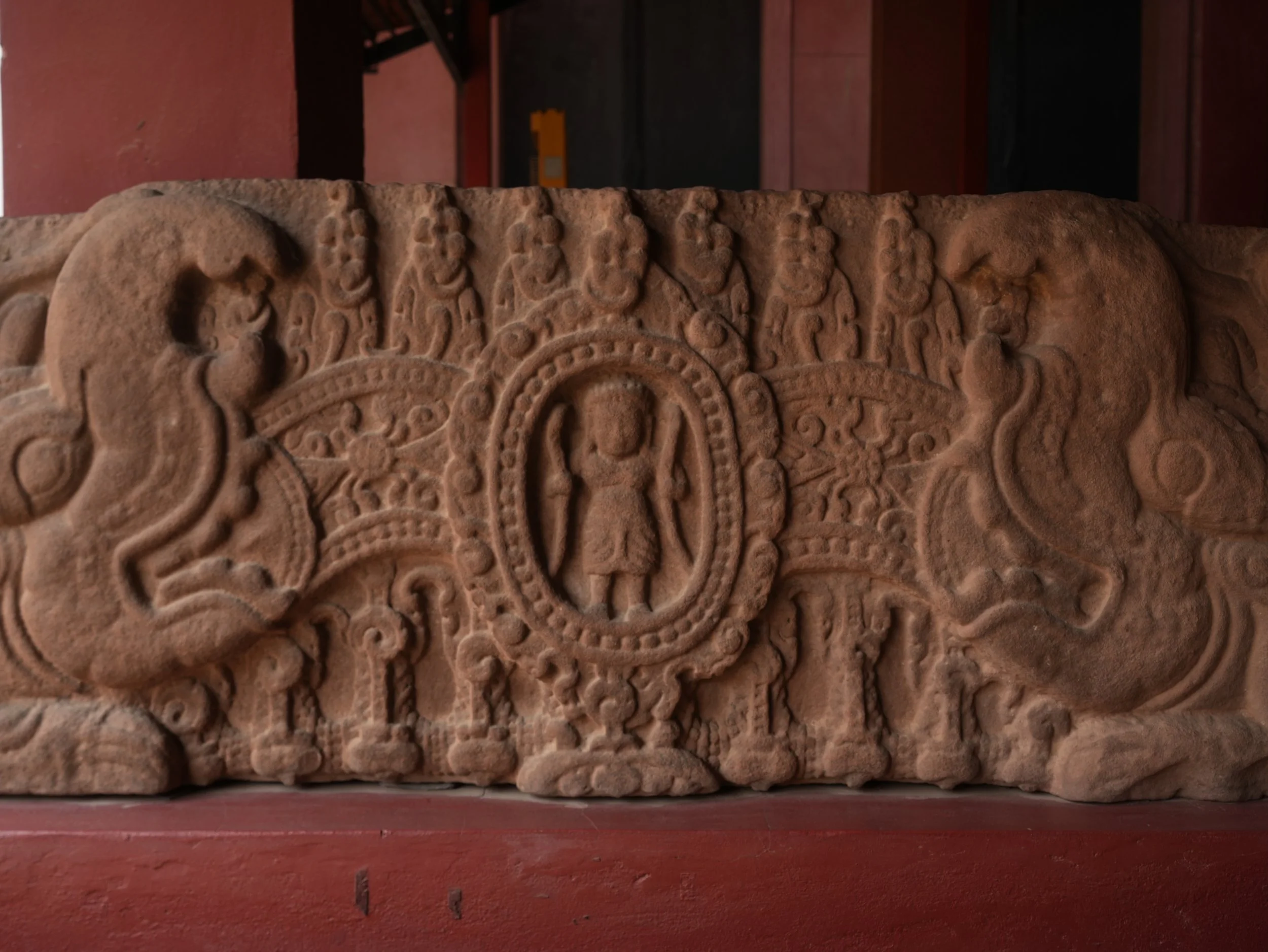
One of my favorite pieces from the museum
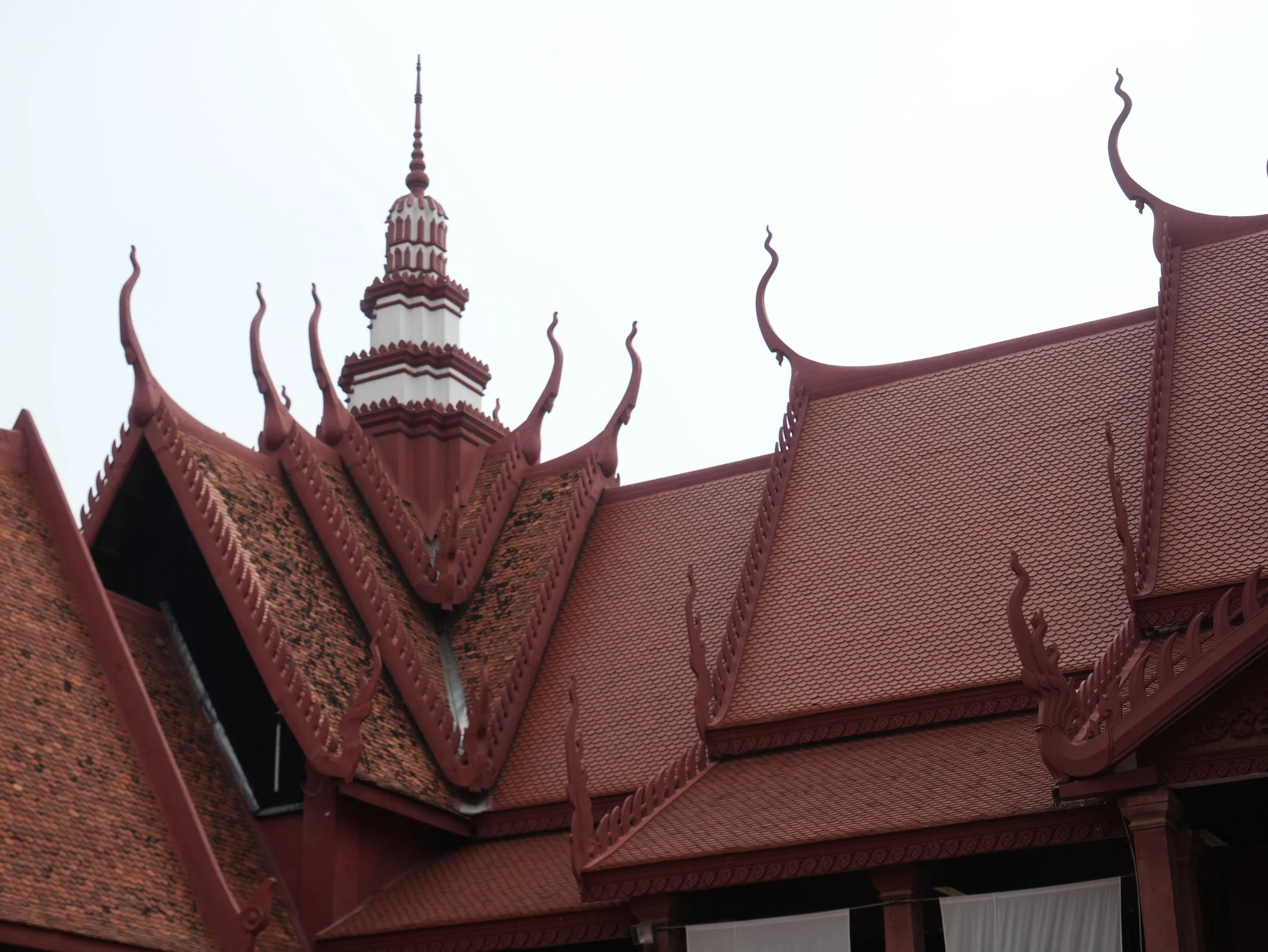
The hybrid aspect of the architecture is so interesting, the building is an artifact in itself
