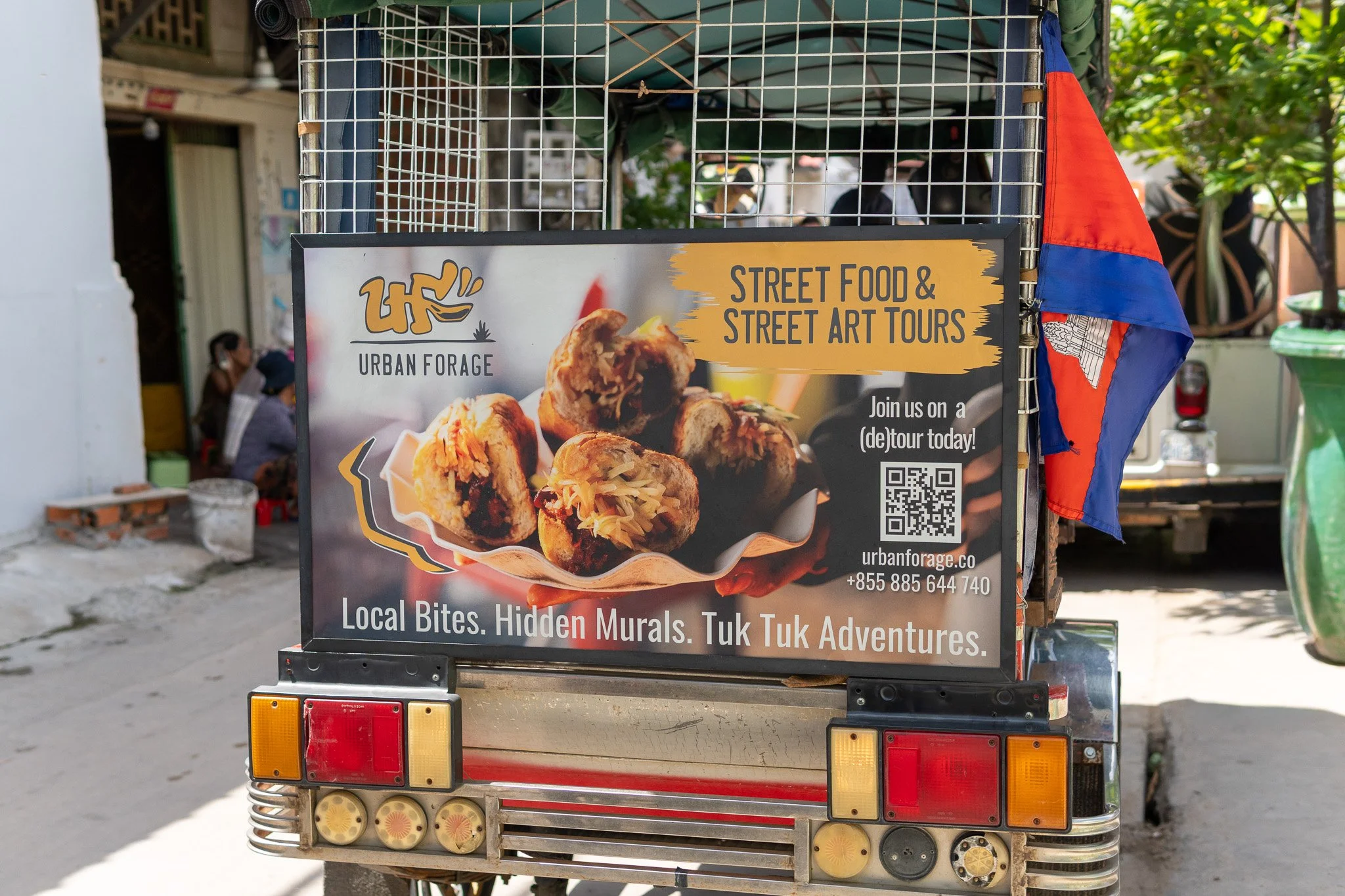
A Morning with Urban Forage Tours
There are many ways to explore Phnom Penh. Sometimes, even when you live here, the best way is simply to let someone else show you around. Together with fellow hospitality professionals from Amanjaya, iRoHa Garden, Pavilion, Plantation and White Mansion hotels, we climbed aboard two tuk-tuks for Urban Forage's Phnom Penh Morning Market and Street Art Tour, led by our local guide, Jackson.
The idea? To cross the city, eat along the way and discover some of the street art hiding in Phnom Penh, Asia's little big city.
Our first stop was right in BKK1.
BKK1 is one of Phnom Penh's most cosmopolitan neighborhoods, packed with cafes, restaurants, hotels and international residents. Yet its local market remains surprisingly overlooked by expatriates and visitors.
While trendy coffee shops are opening all around the neighborhood, inside the market vendors are already busy preparing breakfast, chopping vegetables, arranging fruit and serving their regular customers.
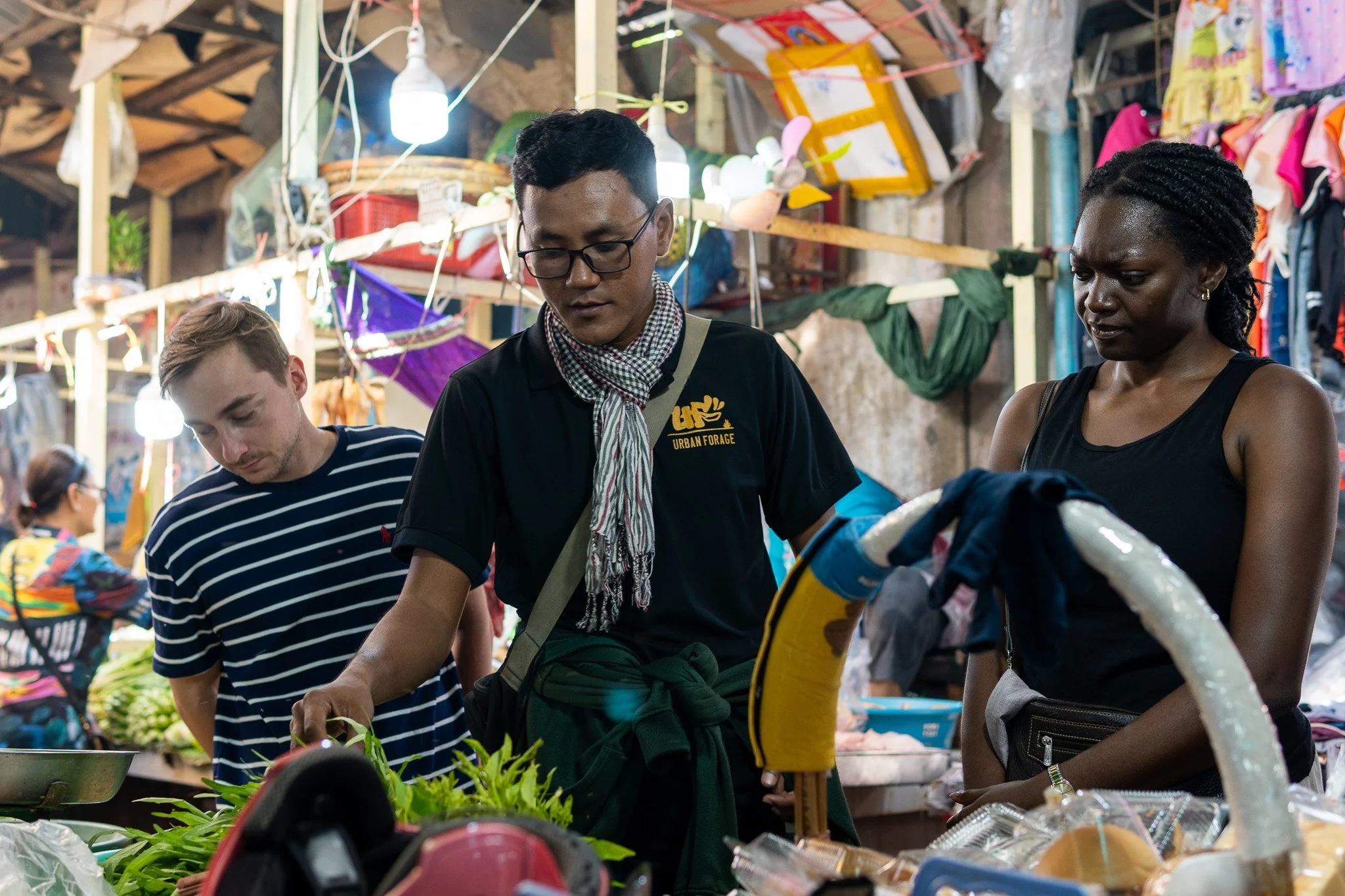
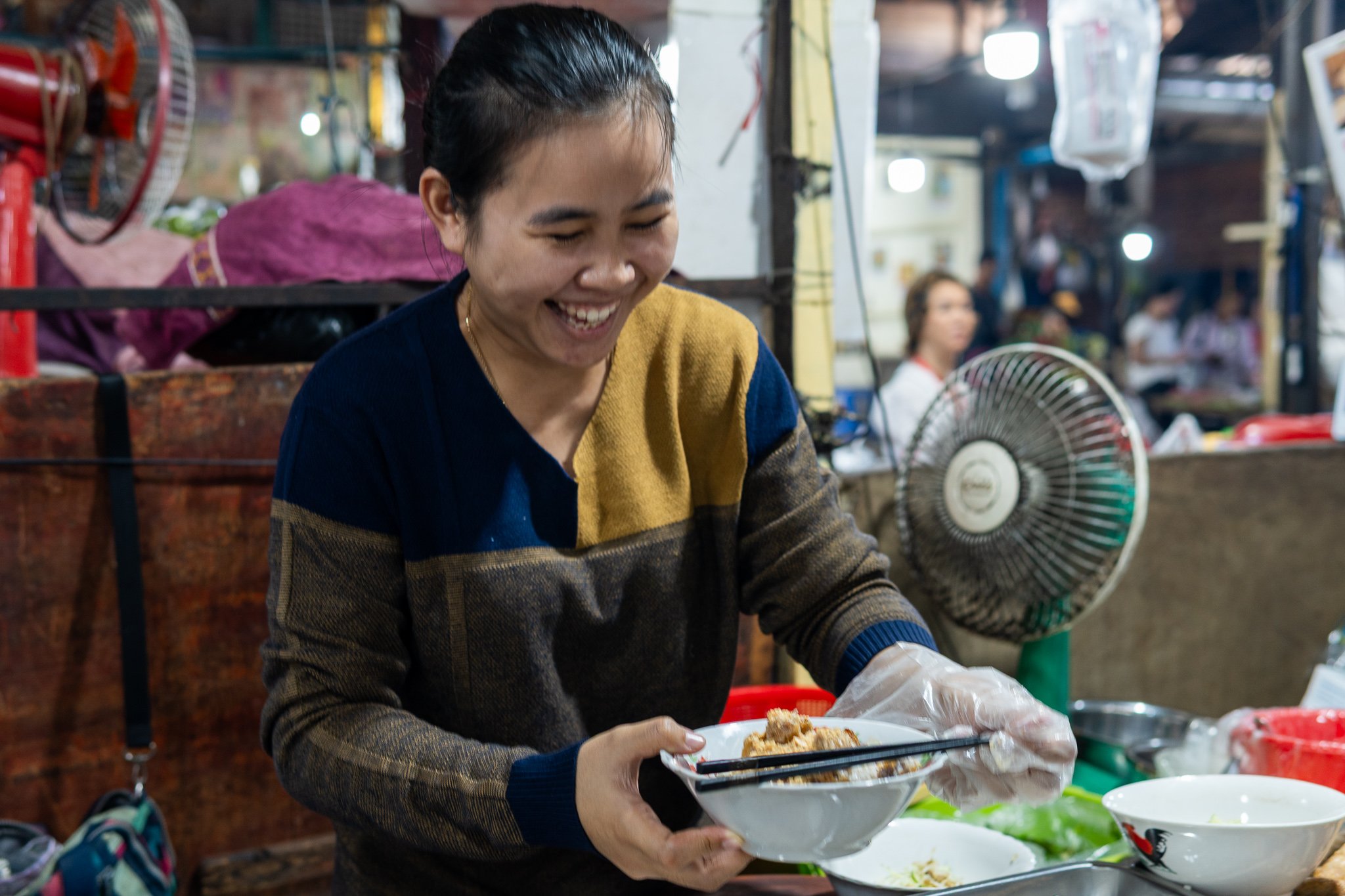
We started with banh sung, a bowl of rice vermicelli with fresh vegetables and fried spring rolls: a Cambodian version of a dish with Vietnamese roots. Fresh, crunchy, slightly sweet and savory at the same time, it was a good way to begin what would become a rather food-filled morning.
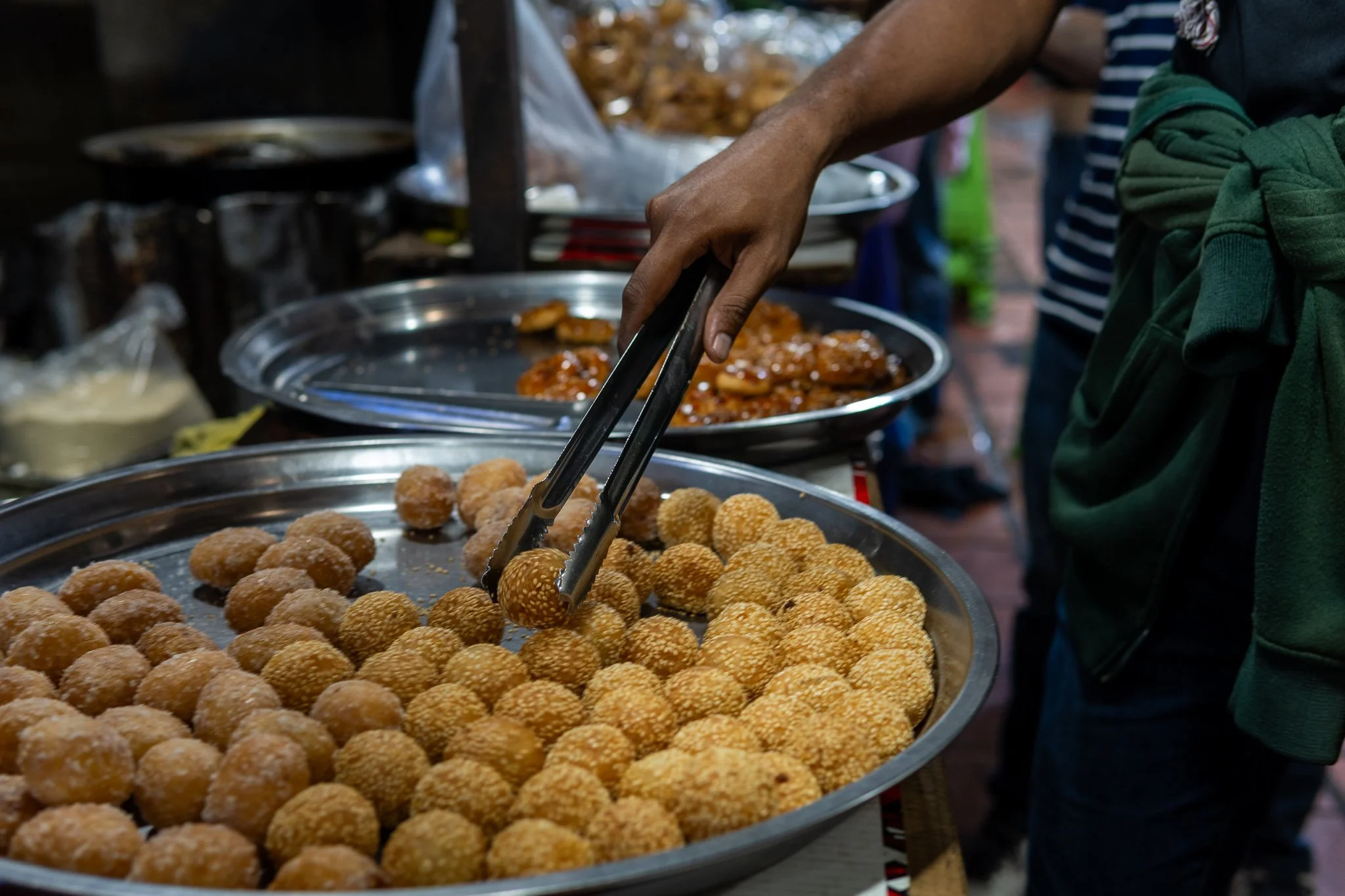
There was more to taste, of course: num kong, the familiar ring-shaped Cambodian doughnut, and num krouch, sesame-coated fried balls with a bean filling. They are the kind of snacks you see in markets all over the country.
That is one of the most enjoyable aspects of this tour: normally, I would probably have walked straight past these dishes without paying them much attention.
A short tuk-tuk ride brought us to the Starbucks at the corner of Streets 57 and 288. Not exactly the first place one would expect to stop on a Cambodian cultural tour, which is precisely why it works.
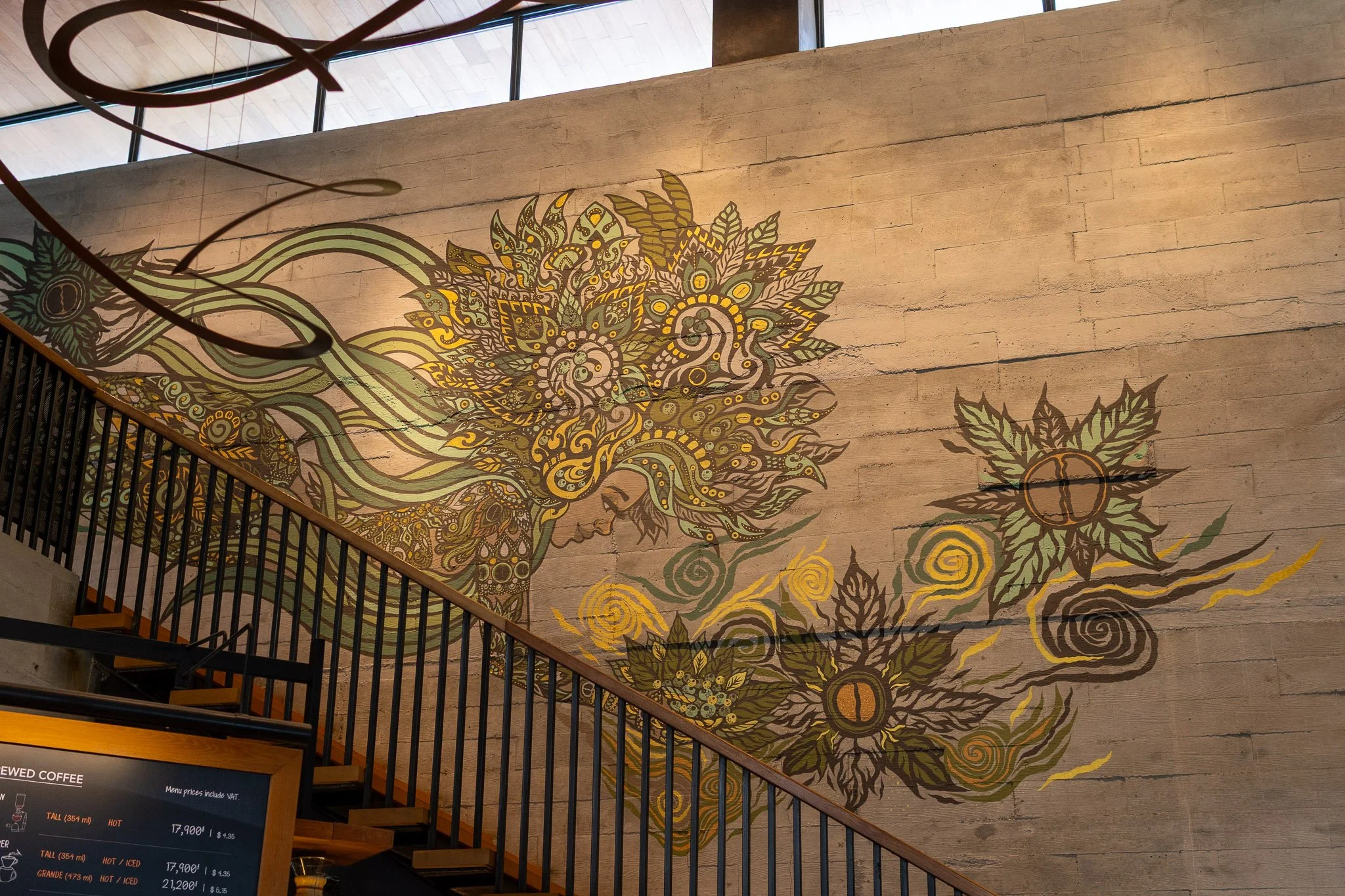
Inside, we found a large mural by Lisa Mam, one of the pioneering figures of Cambodia's urban art movement. Her work blends contemporary street-art techniques with visual references drawn from Khmer culture, an approach that has become increasingly visible around Phnom Penh over the past decade. Here, she reimagines the brand's famous logo in her own style.
Then we headed north, towards one of the city's most unusual open-air galleries.
Boeung Kak was once one of Phnom Penh's largest urban lakes. It disappeared during redevelopment in the late 2000s and early 2010s, dramatically changing the neighborhood around it.
One fragment of the old Lakeside atmosphere survives around Street 93.
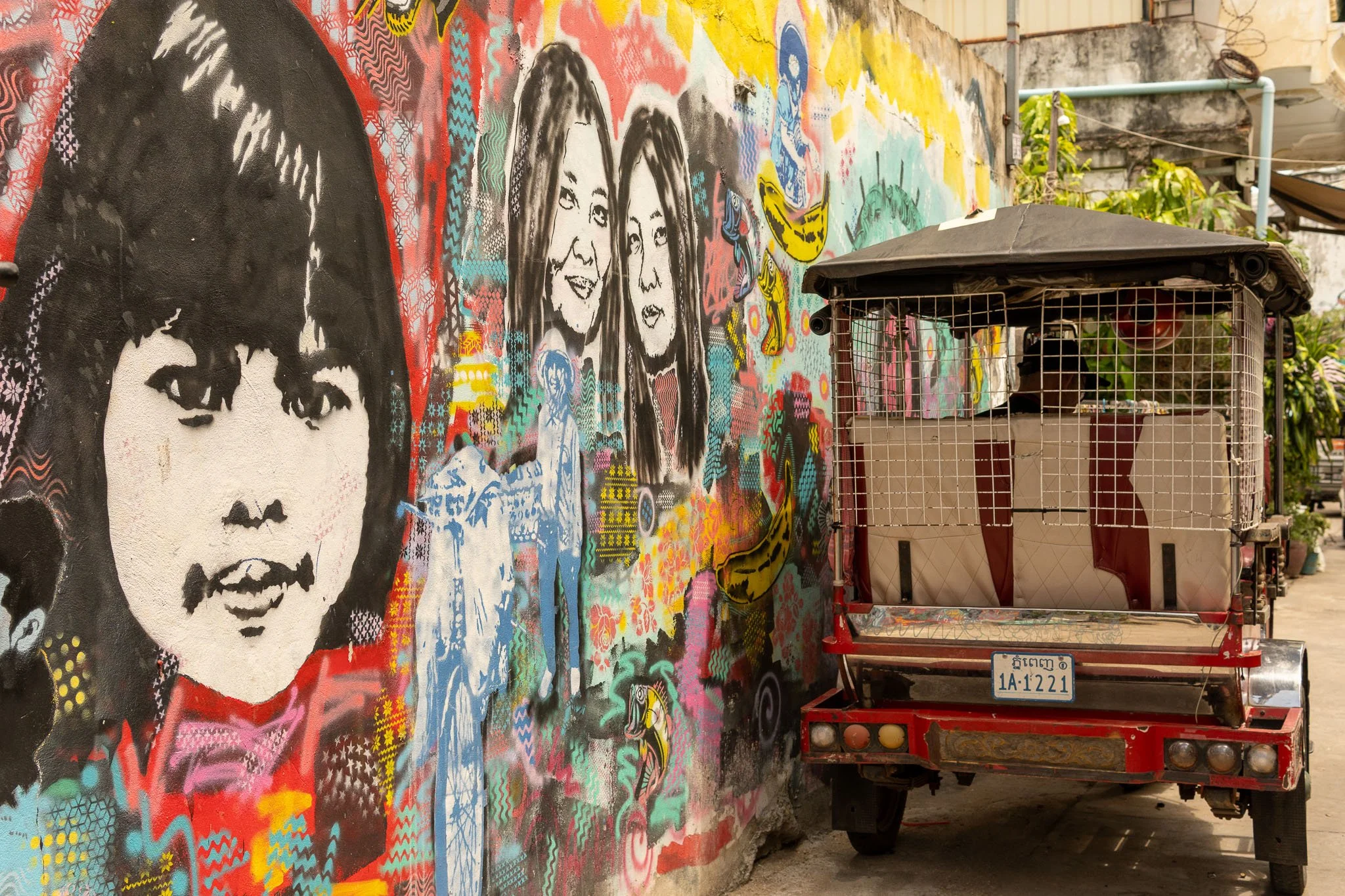
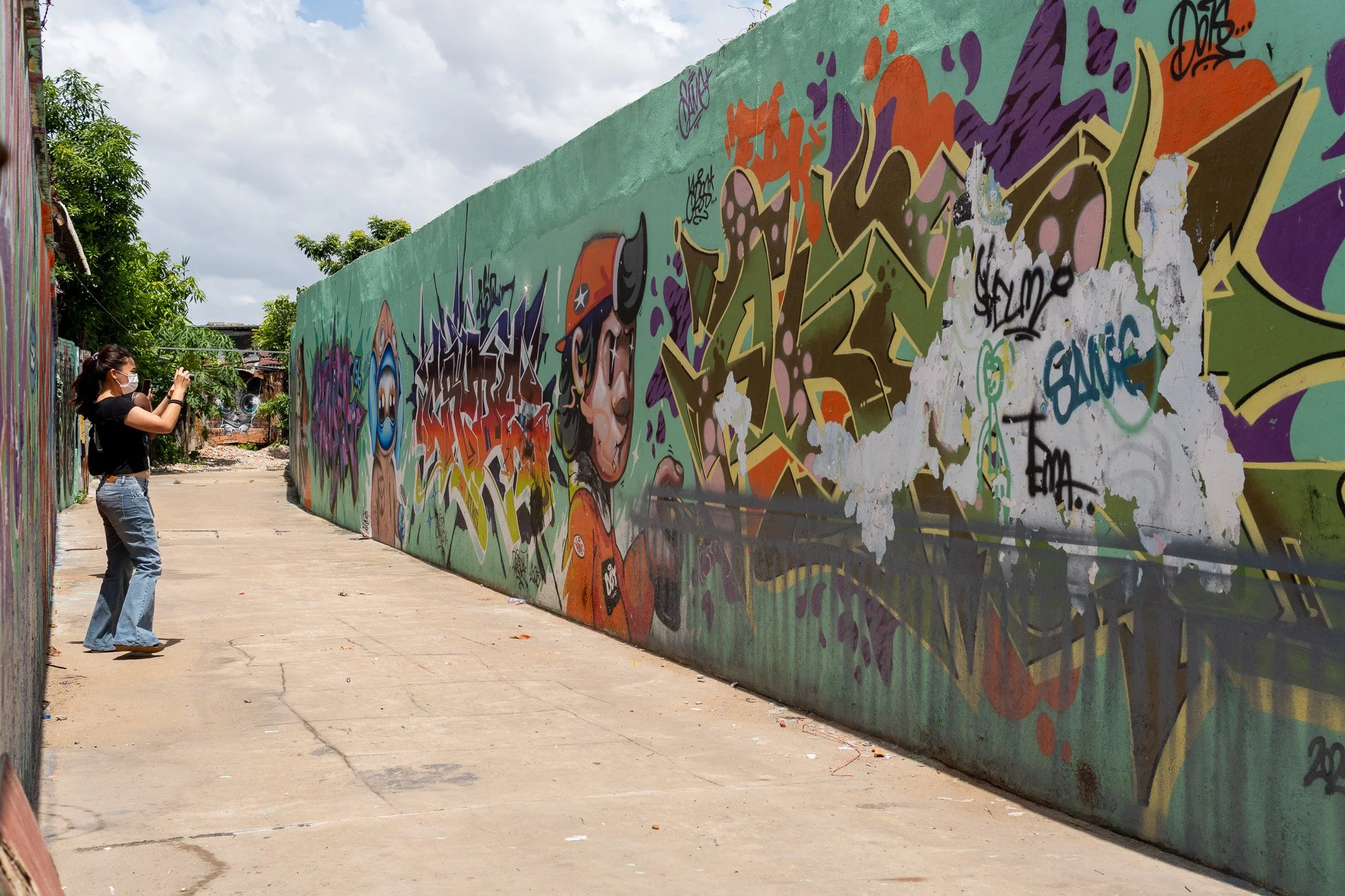
Here, walls, houses and alleyways have gradually become canvases for Cambodian and international artists. There is no fixed exhibition: some paintings last for years, while others disappear beneath new layers of paint.
Walking through the small streets, we came across portraits, Khmer-inspired figures, lettering and large abstract compositions. What you photograph today might be covered by another artist a few months from now.
Phnom Penh is changing quickly, and Street 93 somehow reflects that: unfinished, sometimes chaotic, colorful and never quite the same twice.
Back in the tuk-tuk, another short ride took us close to Wat Phnom and the Kantha Bopha Children's Hospital.
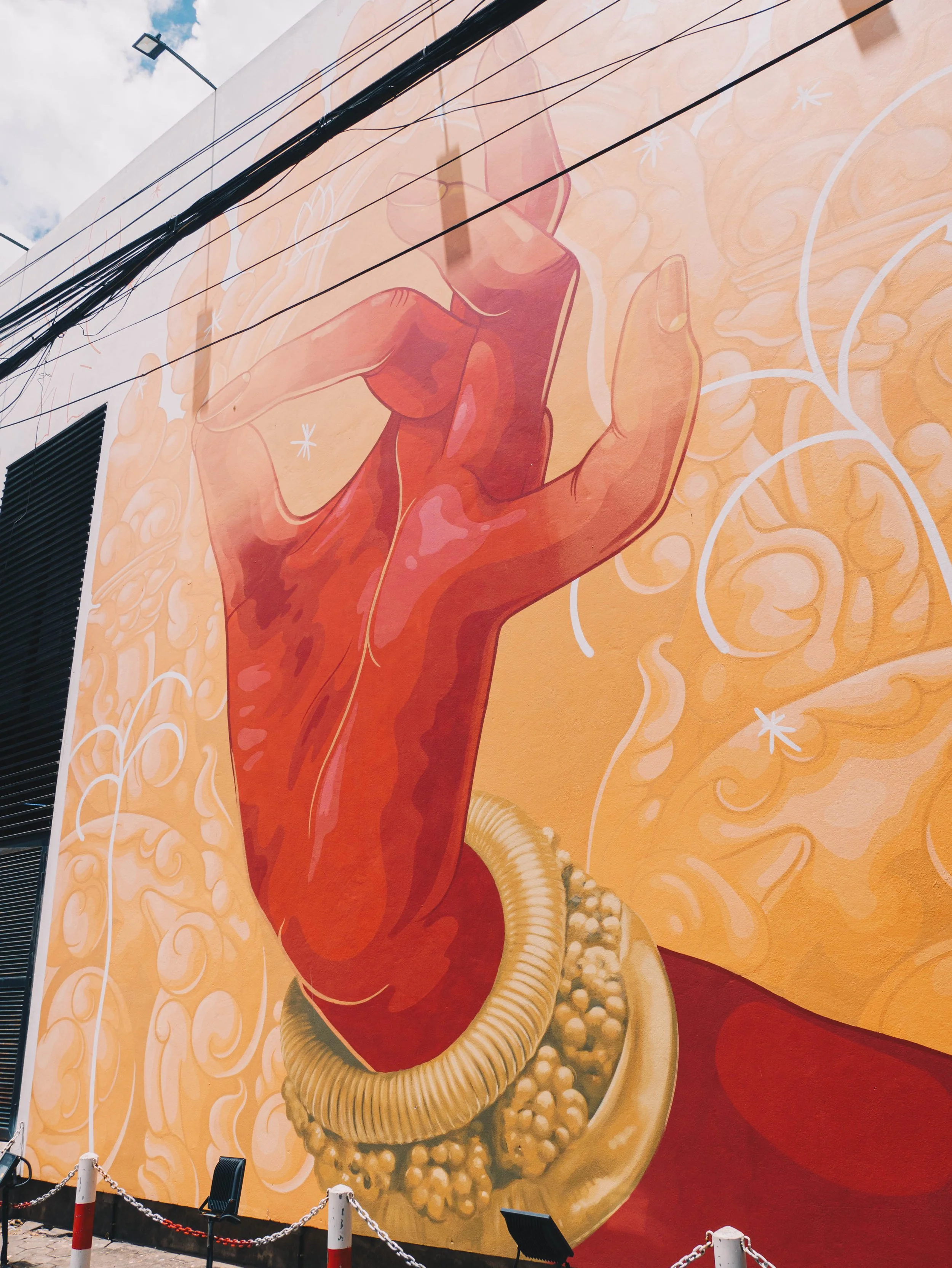
A work by French artist Chifumi covers a large section of one of the hospital walls. His murals have become recognizable around Cambodia and elsewhere in the world.
Here, the monumental hand recalls the movements of an Apsara dancer, its fingers forming a gesture that evokes a lotus flower opening.
Seen from across the street, what would otherwise be an ordinary hospital wall becomes difficult to miss.
By then, it was apparently time to eat again.
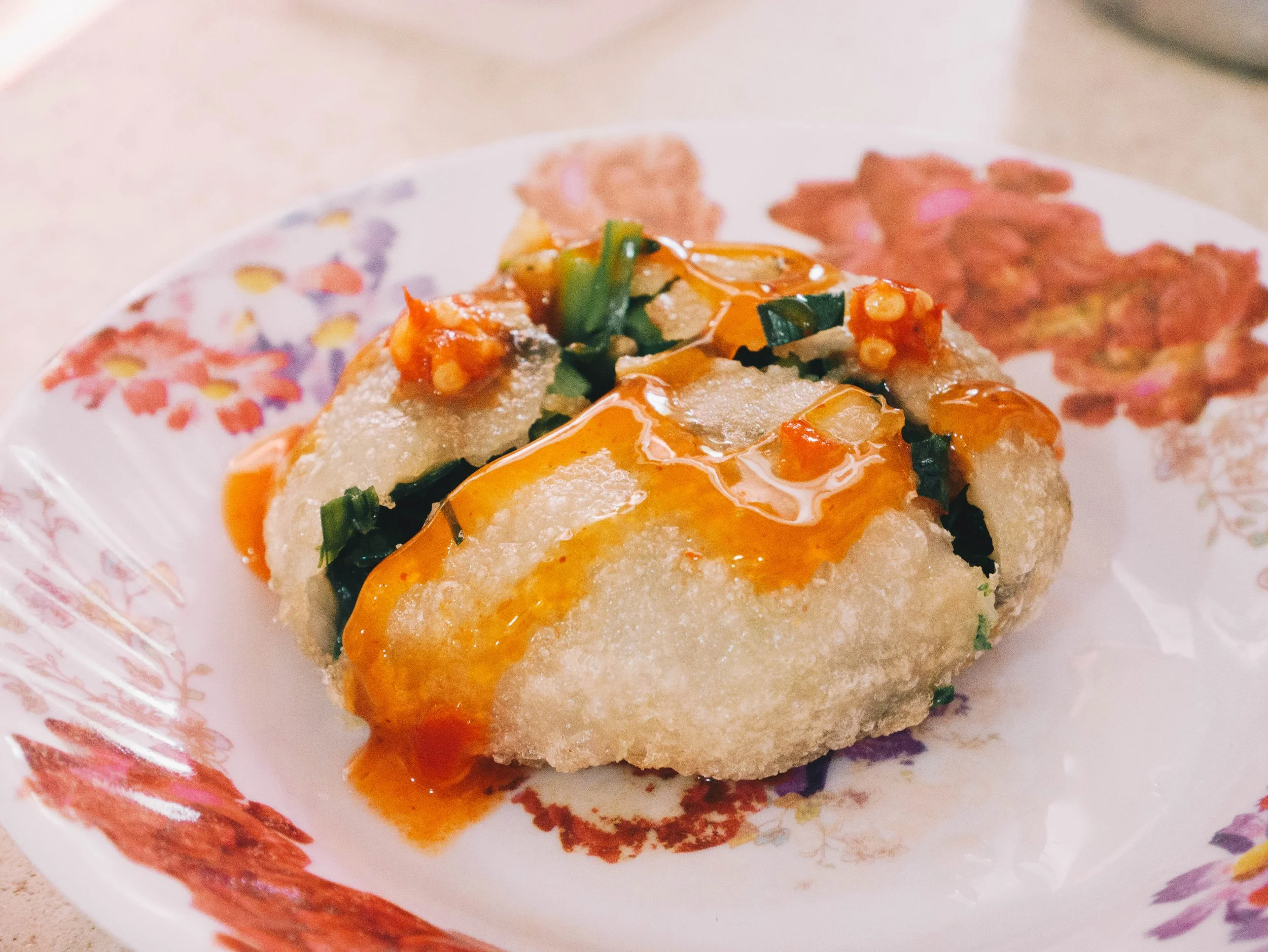
On Street 178, we stopped at a simple streetside spot for nom ka chai, one of those Cambodian snacks that deserves far more attention than it gets.
Made from rice flour and generously filled with chives, the cakes are fried until slightly crisp on the outside while remaining soft and chewy inside. Served hot with dipping sauce, they are very good indeed.
A detour through Palace Lane
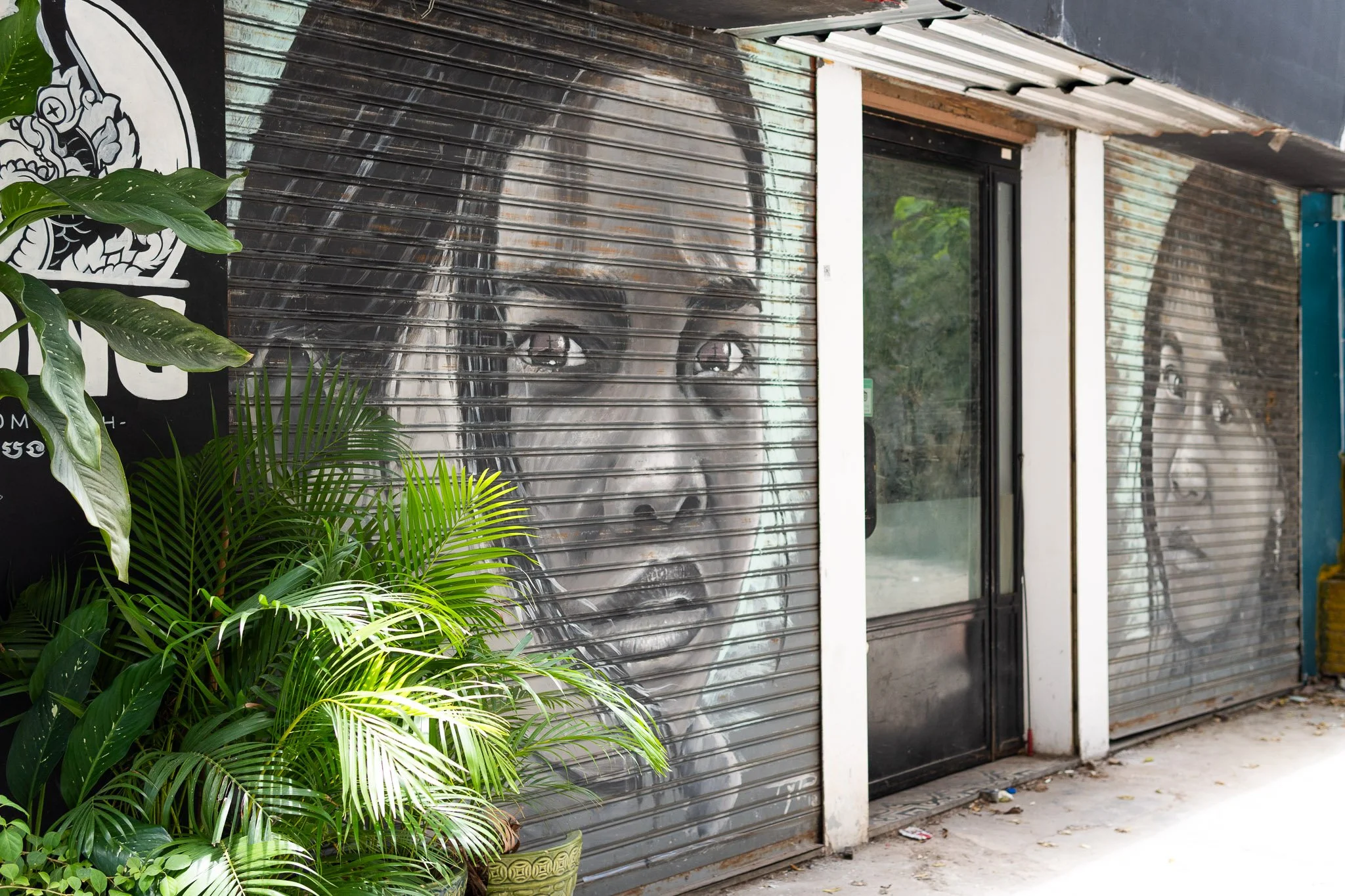
Our street-art hunt continued at Palace Lane, the narrow alley connecting Streets 240 and 244, a couple of minutes from the Royal Palace.
The lane is home to a few restaurants and bars, but remains very quiet. Its walls have kept much of their character, with graffiti and murals scattered along the alley. The visit is fairly quick; Street 93 remains the main street-art attraction in the capital.
Eventually, we found ourselves back in BKK1 for what could technically be called lunch, although the dish itself is more commonly eaten for breakfast.
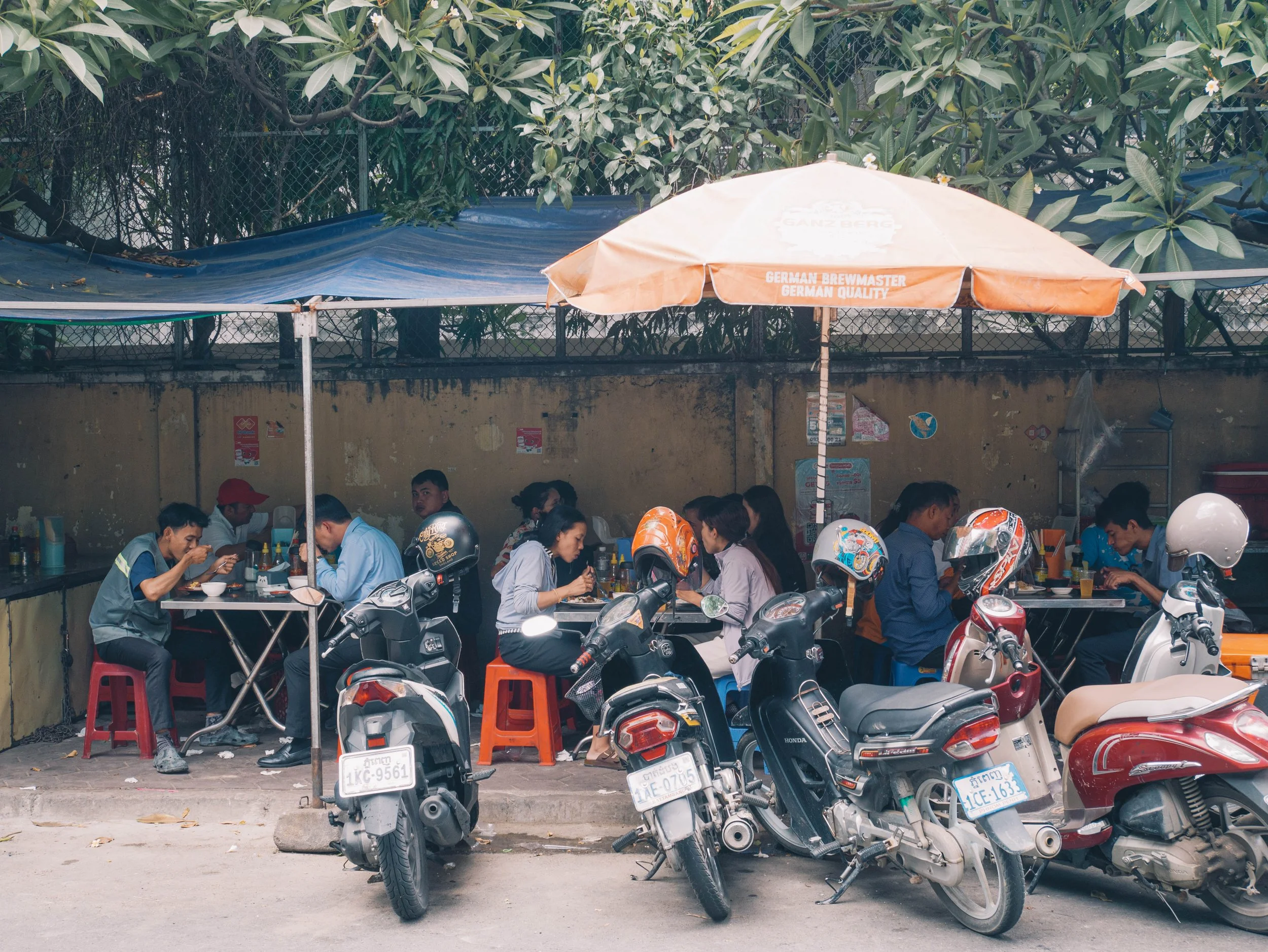
Bai sach chrouk is about as Phnom Penh as a morning meal can get. It is grilled pork served with rice, usually accompanied by pickled vegetables and a light broth.
You find it everywhere, from tiny roadside stalls to busy neighborhood restaurants, and for thousands of Phnom Penhers it is simply part of the morning routine.
Before saying goodbye to Jackson, our guide for this fascinating morning, Urban Forage had one final surprise waiting for us. I will leave that part out. Some things are better discovered on the tour.
Practical information
Urban Forage's Phnom Penh Morning Market and Street Art by Tuk Tuk tour combines local food, markets and several street-art stops around the capital.
More information: https://urbanforage.co/