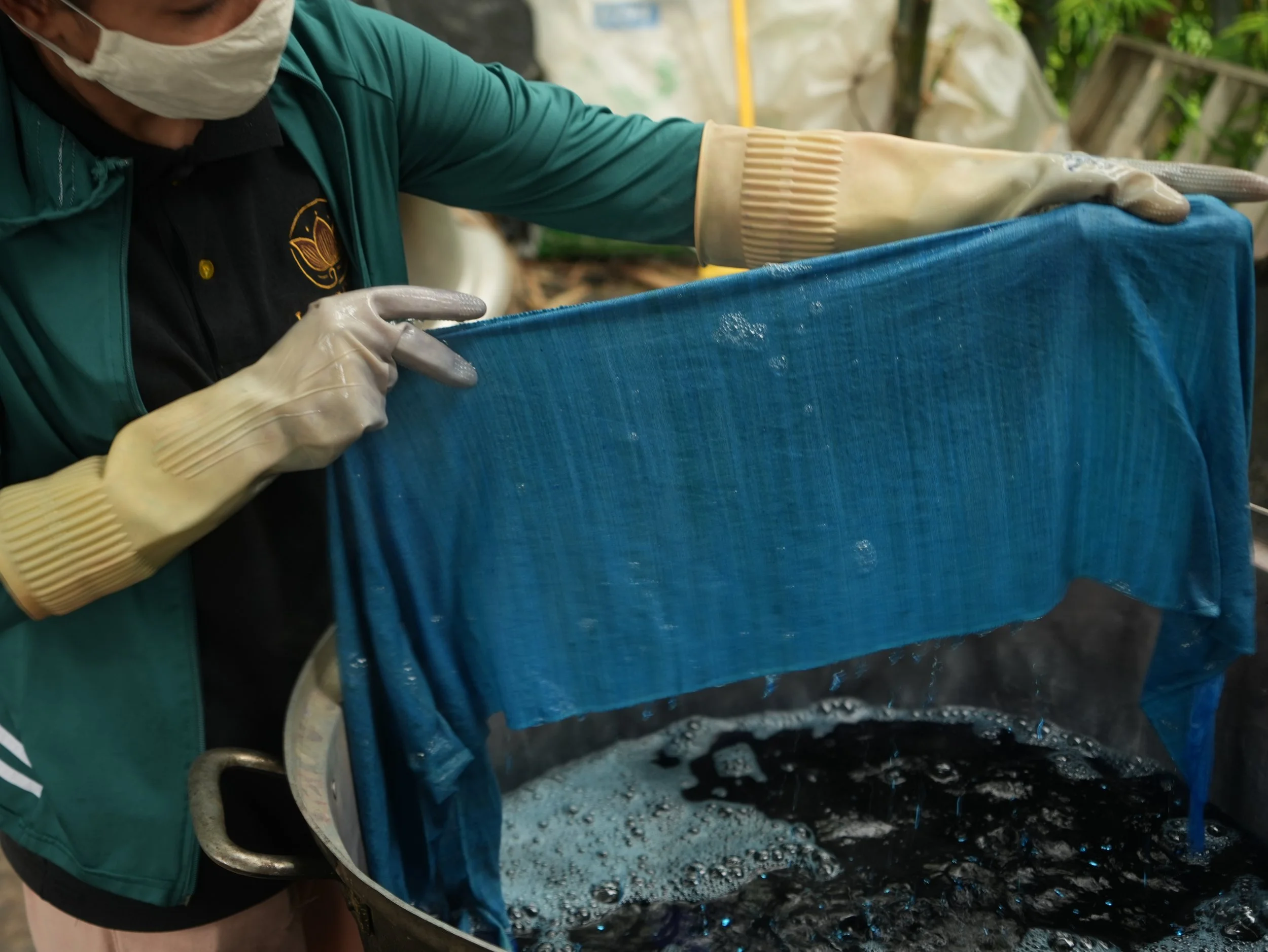
Lotus Silk Farm
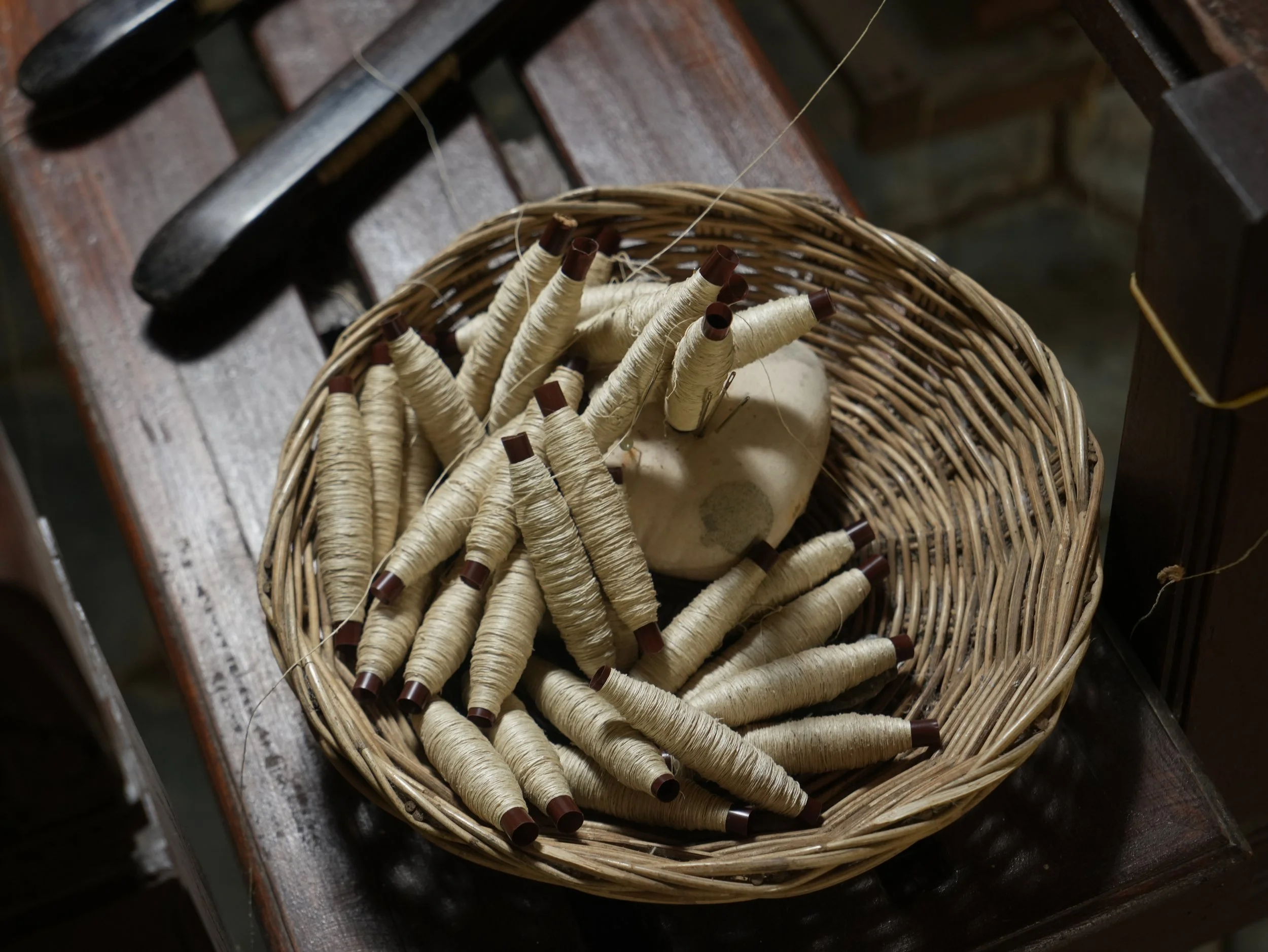
Cambodia is well known for its textiles, particularly the silk produced by silkworms. Handwoven Khmer silk can be incredibly expensive, especially when traditional dyeing and weaving techniques are involved. But far less is known about lotus silk.
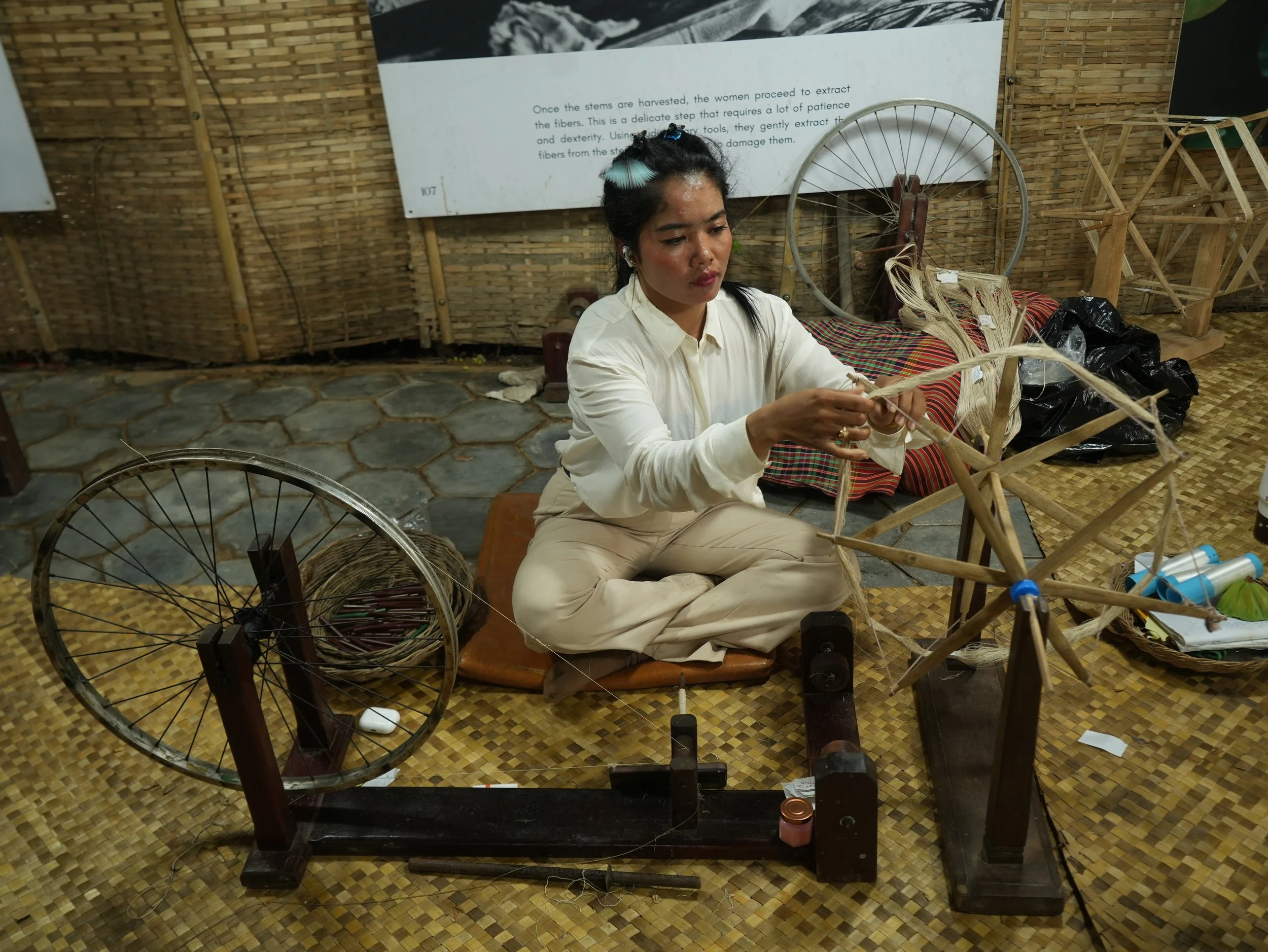
Lotus fibre weaving originated around Inle Lake in Myanmar, where the fabric was traditionally used to make sacred robes offered to Buddhist monks and images. Producing it is exceptionally slow because every strand must be extracted by hand from inside a freshly cut lotus stem.
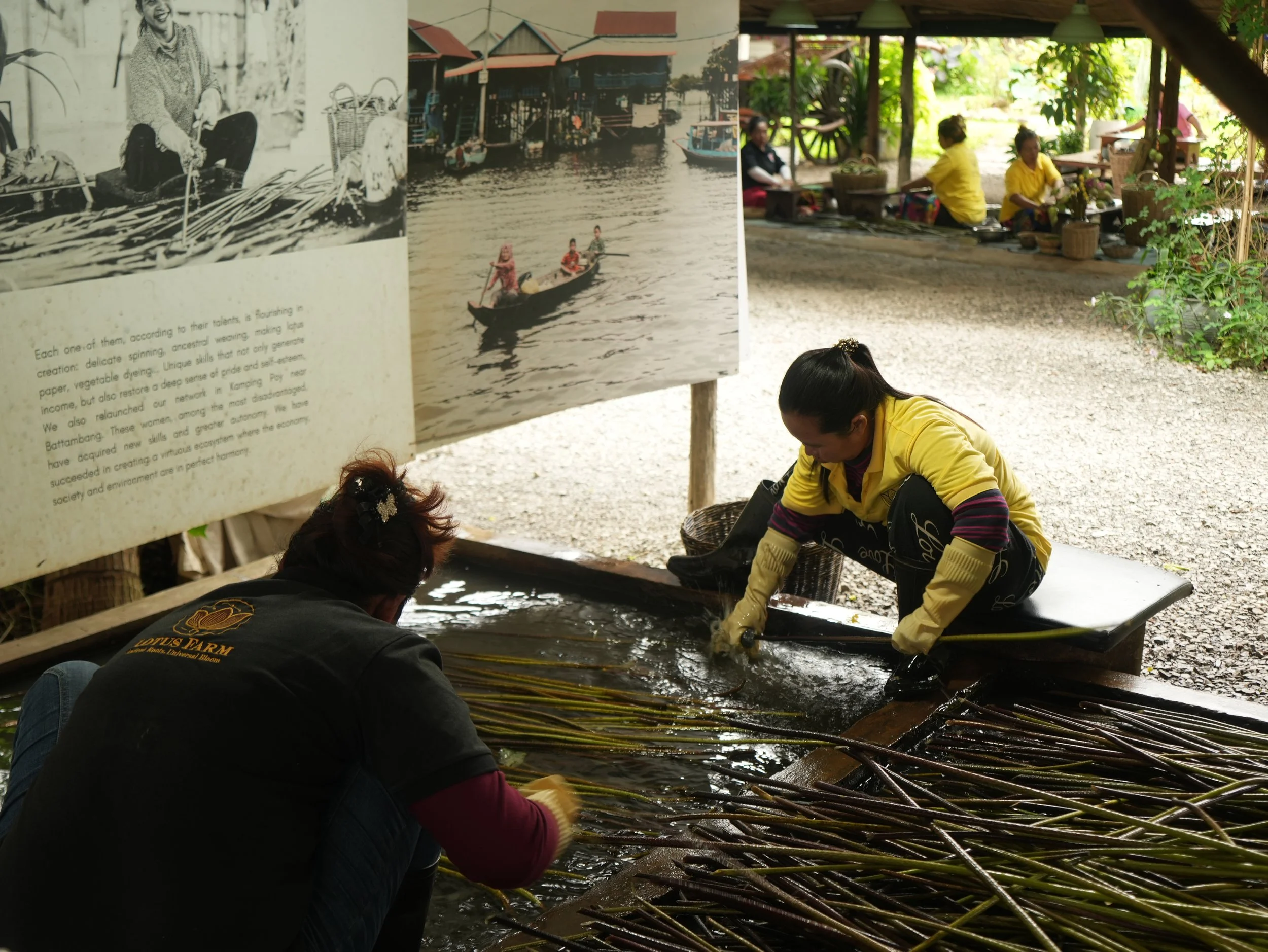
Bopha accompanied me around the farm and explained the entire process. An artisan cuts several stems, gently pulls the pieces apart and reveals a cluster of almost invisible fibres stretching between them. Those fibres are rolled together by hand, stem after stem, until they form a continuous thread strong enough to weave.
The work has to be done quickly, before the cut stems begin to dry. Nothing about the process can really be rushed or industrialised.
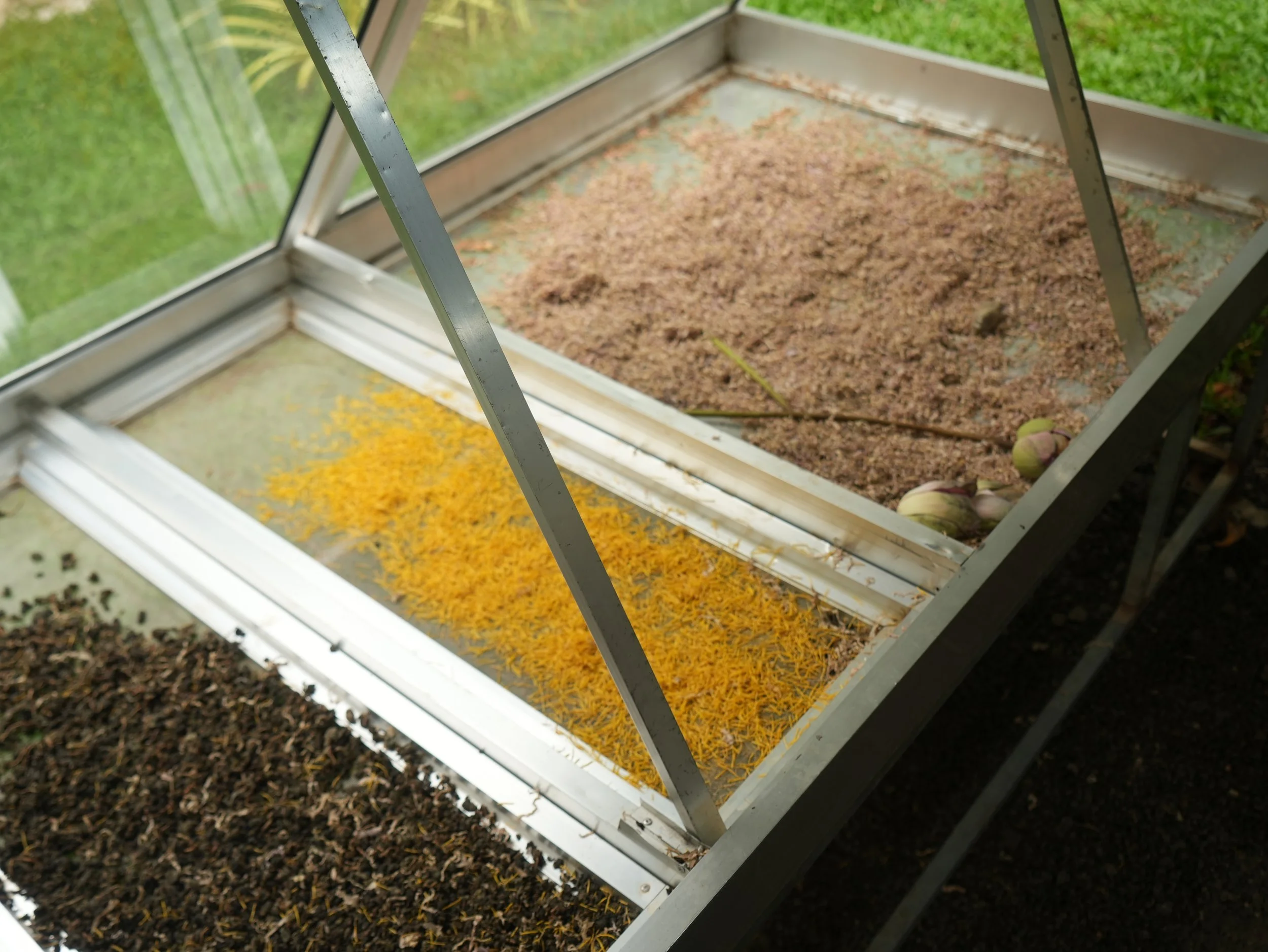
What I also loved was how little of the plant is wasted. Different parts are used to make lotus tea, while material left after fibre extraction can be transformed into paper, agricultural mulch and even a plant-based material known as lotus leather.
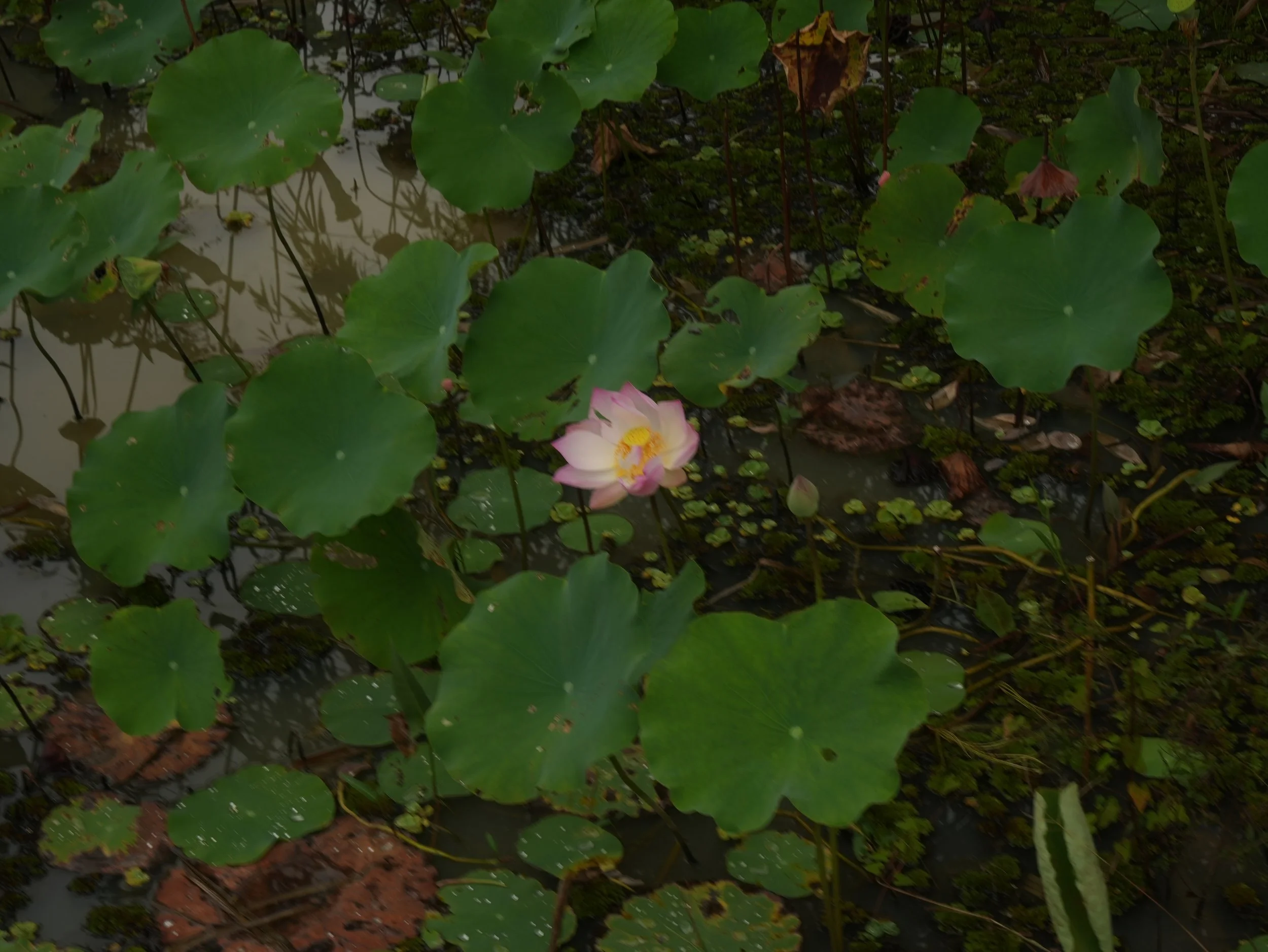
There is also a boat tour through the surrounding lotus fields. Unfortunately, the rain made me slightly nervous about getting onto the water, so I decided to skip it. Next time!
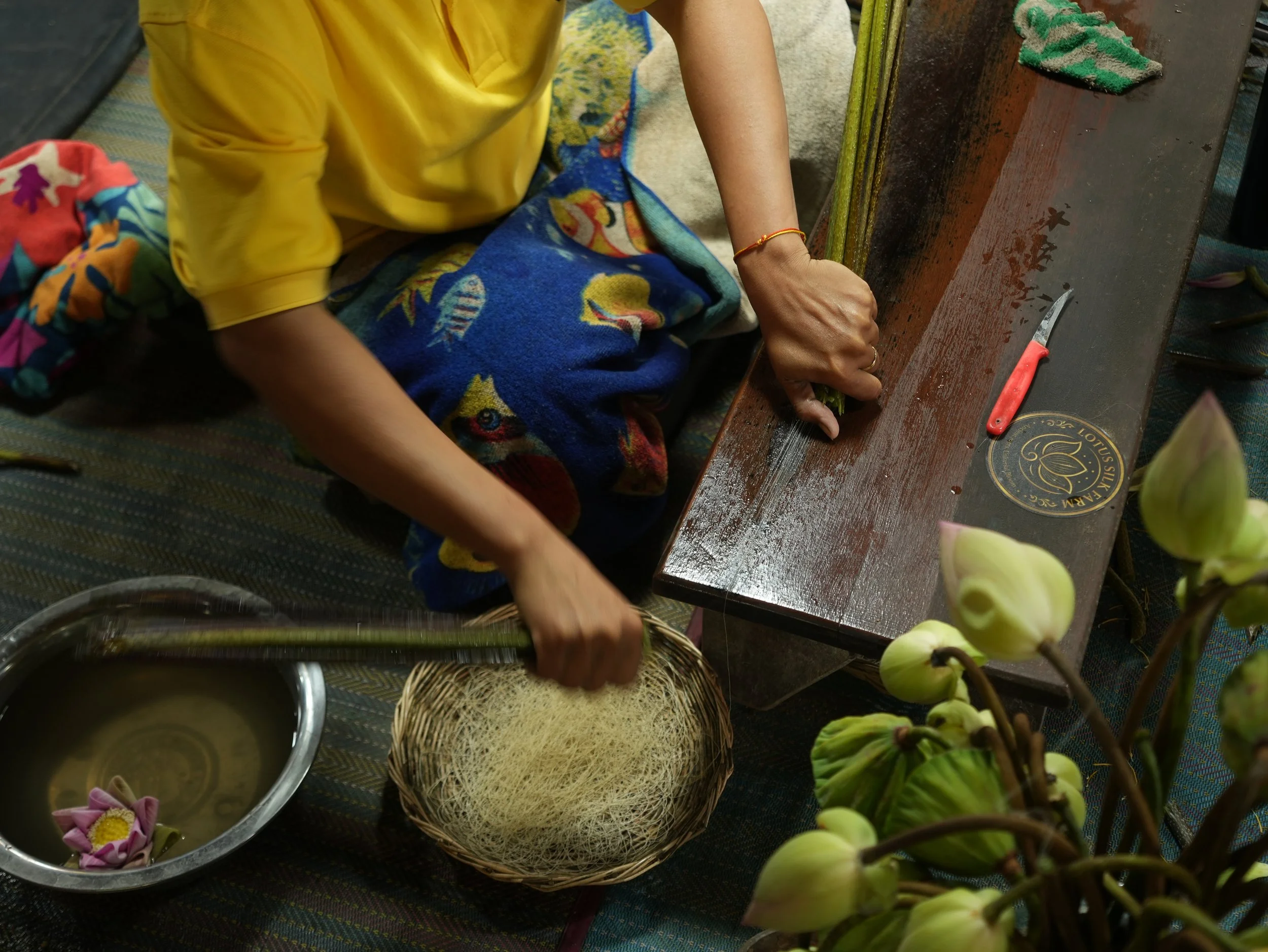
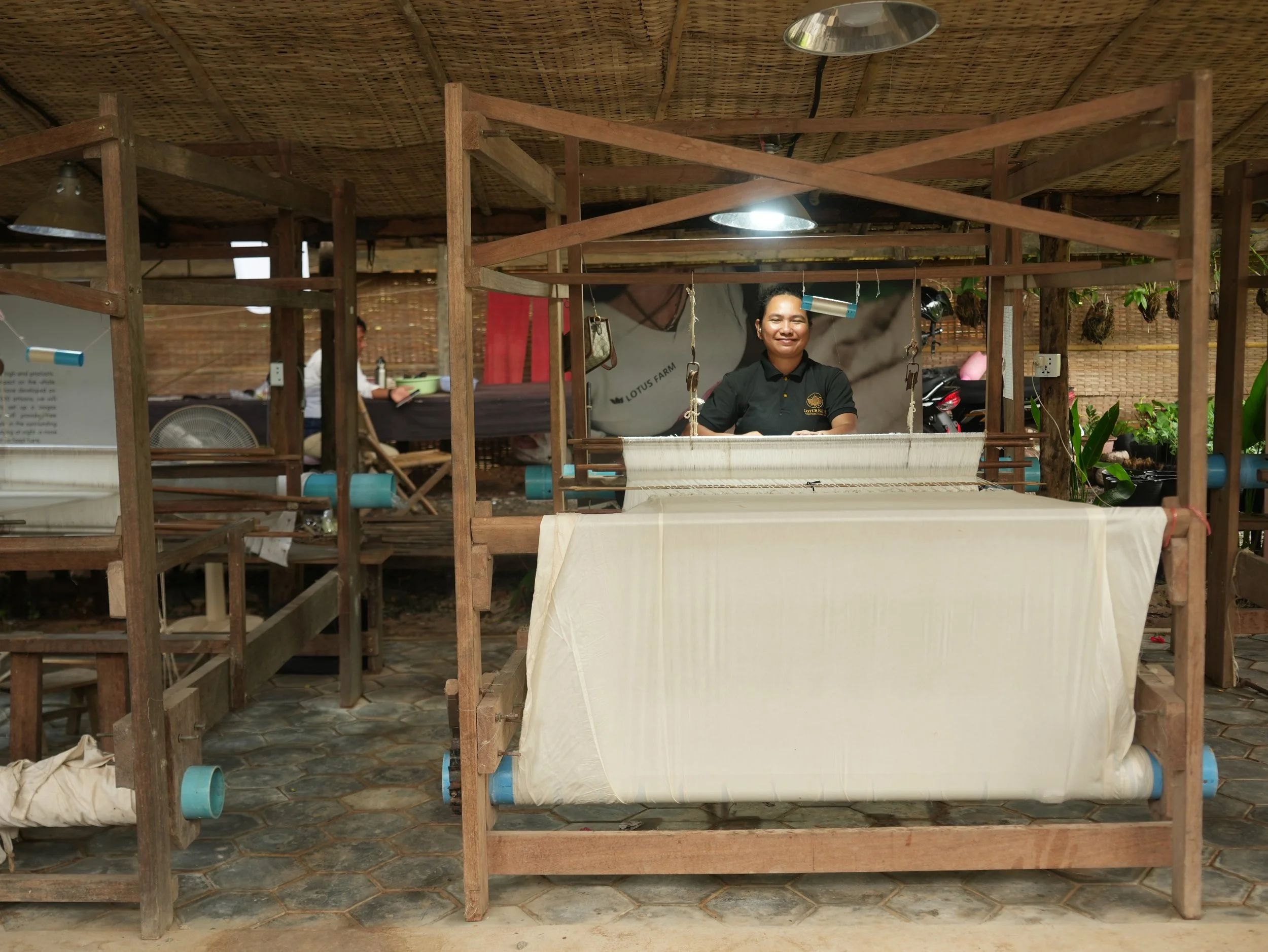
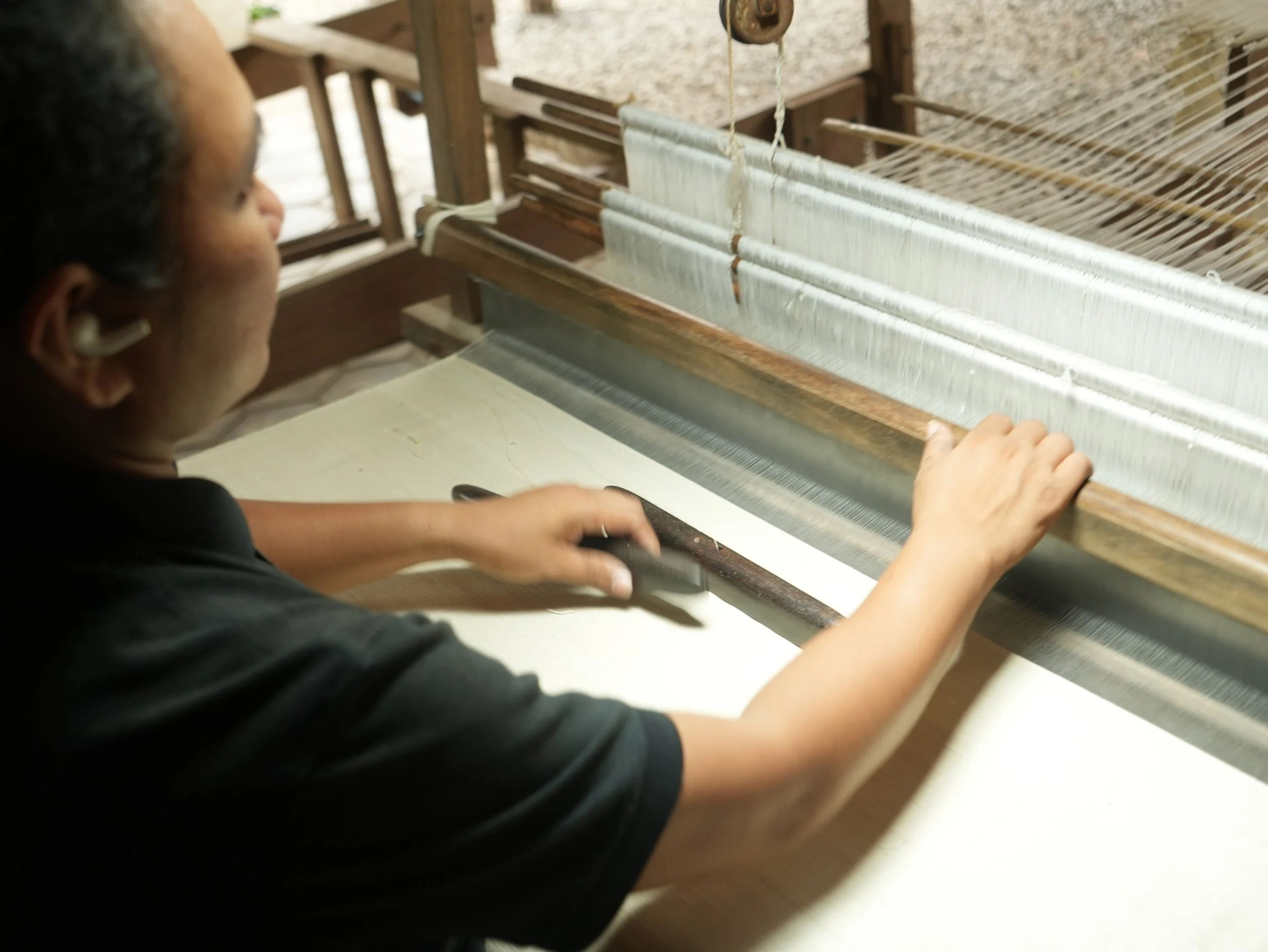
The tour itself was quick, and by the end I really wanted to take home a lotus silk souvenir. I had heard of hemp fabric and even textiles made from pineapple leaves, but never lotus silk, and I grew up in Cambodia. Then I saw the price. One metre of pure lotus fabric was a whopping $444. Bopha explained that producing a single metre can require around 4,000 metres of hand-extracted lotus thread and roughly three weeks of labour. Once you have watched someone pull those tiny fibres from one stem at a time, the price begins to make sense. You are not simply paying for fabric; you are paying for thousands of repeated gestures, extraordinary patience and a type of knowledge that cannot easily be mechanised.
Safe to say, I did not leave with my metre of lotus silk that day.
I’ll have to save up and come back. but discovering that such a rare textile is being developed here in Siem Reap already felt like taking something valuable home.